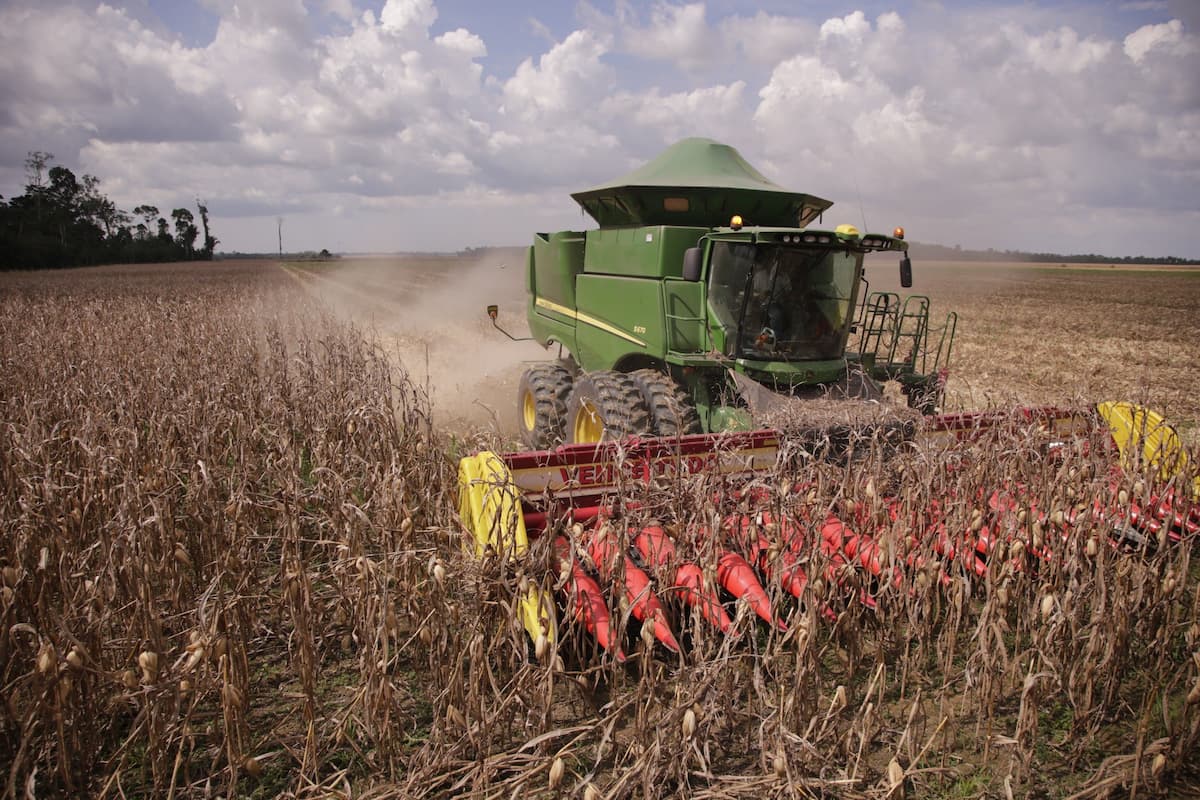
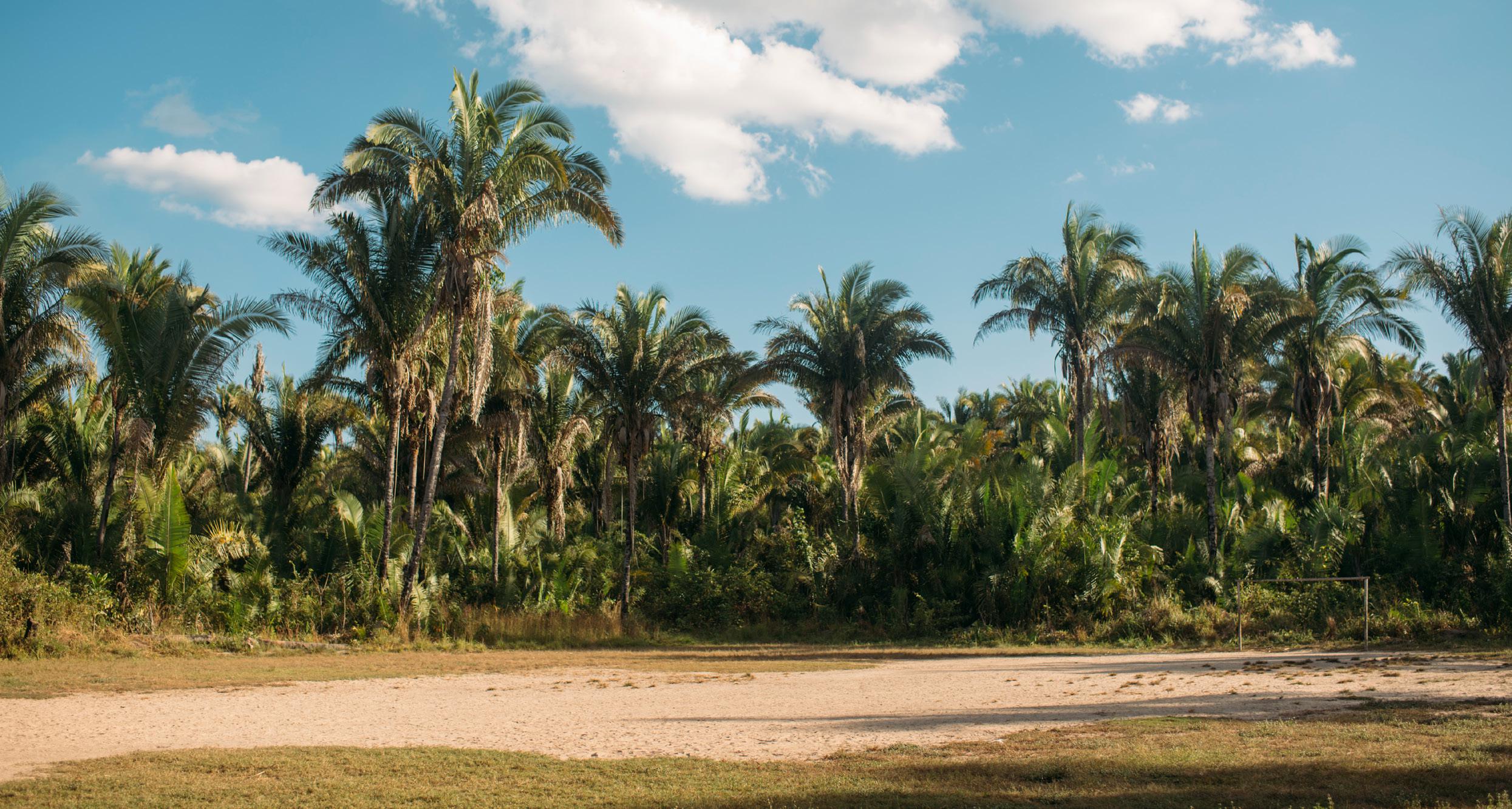
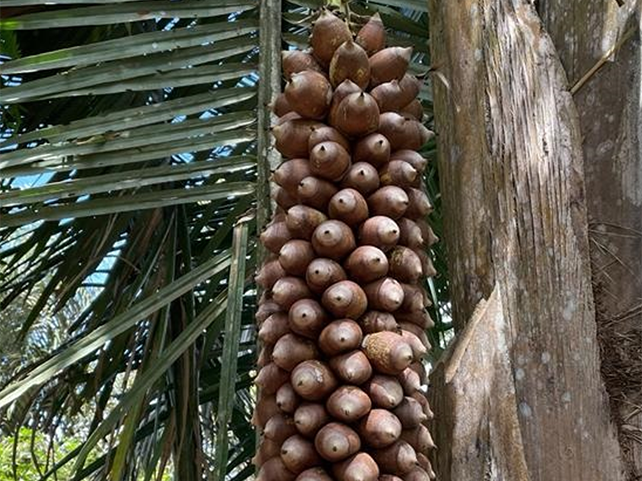
It is no coincidence that the name babassu, a native Brazilian tree, originates from the Indigenous word wawasu, meaning “big fruit”. It is a palm tree that can reach up to 30 meters in height and produce three to five lush bunches, each containing hundreds of nuts. The grandeur of this giant of nature is reflected in its ability to withstand wildfires and predator attacks, as well as in the unique relationship it has established with humans.
Benefiting from the abundance of this vegetation, however, requires more patience than skill. This is because the fruits do not begin to appear until the palm reaches its eighth year of life. Once it reaches that age and starts bearing fruit, however, it becomes clear that the wait was worthwhile. The plant maintains a high level of productivity and continues at the same pace for approximately 35 years.
Between the long wait and the bonanza, there is a group of extractivists who preserve the secular tradition of collecting babassu, cracking its nuts, and making use of every part of the palm. They are the Babassu nut breakers, who live primarily in the states of Maranhão, Piauí, Pará, and Tocantins, along the border between the Amazon and Cerrado biomes, in a region known as Mata [woods] or Zona dos Cocais [Babassu Forest Zone]. In this area, they balance tradition with challenges of preserving sustainable production practices and passing them on from one generation to the next.
Emotional Connection
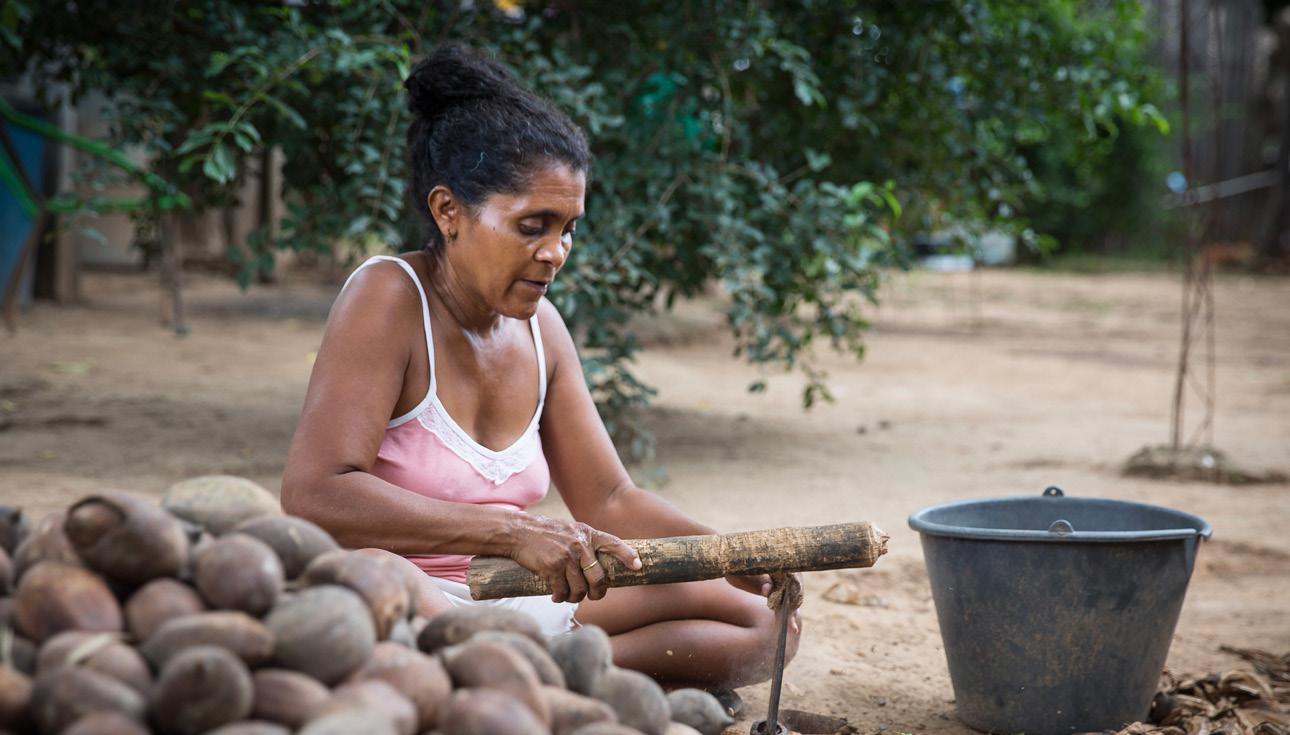
Cledeneuza Oliveira lives in São Domingos do Araguaia, in South Eastern Pará. She has learned the art of harvesting babassu from her foremothers and became a babassu nut breaker at an early age. She explains that, culturally, women develop a ‘mother- daughter’ connection with the palm, whose scientific name is Attalea speciosa.
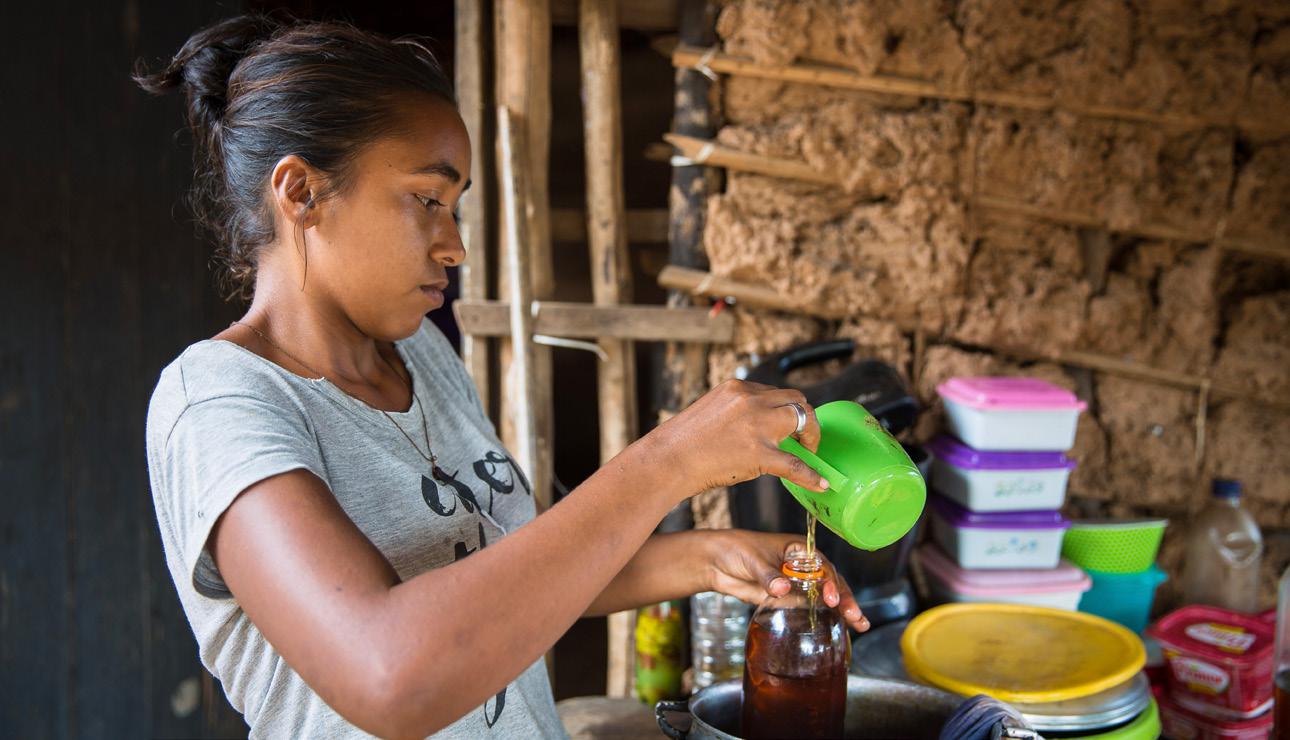
“The babassu palm is very important to us. We even call it our mother because it is where we earn our livelihood. Year after year, throughout our lives, we crack the nuts, produce oil, make milk to season our food, and also make soap. All of this has helped generate income and support our families”, says the babassu nut breaker.
Guilhermina Cayres, a researcher at the Empresa Brasileira de Pesquisa Agropecuária (Embrapa) [Brazilian Agricultural Research Corporation] in Maranhão who works with babassu nut breakers, explains that this maternal relationship stems from the way every part of the palm and its byproducts is put in use.
“The kernel and mesocarp (the fleshy middle layer of the fruit) are turned into food products such as babassu oil, cooking oil, breads, cookies, cakes, ice cream, porridges, beverages and many others. The epicarp (husk) is transformed into charcoal for household use and as a source of income. The leaves and the endocarp (the hard inner part of the nut) are used to make handicrafts, roofing materials, pillars for various types of construction, and household items”, Guilhermina explains.
In addition, the fruit provides other benefits, such as the gongo, the larva of a beetle species that develops inside the nut and is consumed as a protein-rich food, and the straw, which are used in basket weaving.
A logic of sustainability
By respecting the species’ natural life cycle and making use of every part of the fruit, babassu nut breakers demonstrate their commitment to sustainability and the preservation of traditional knowledge.
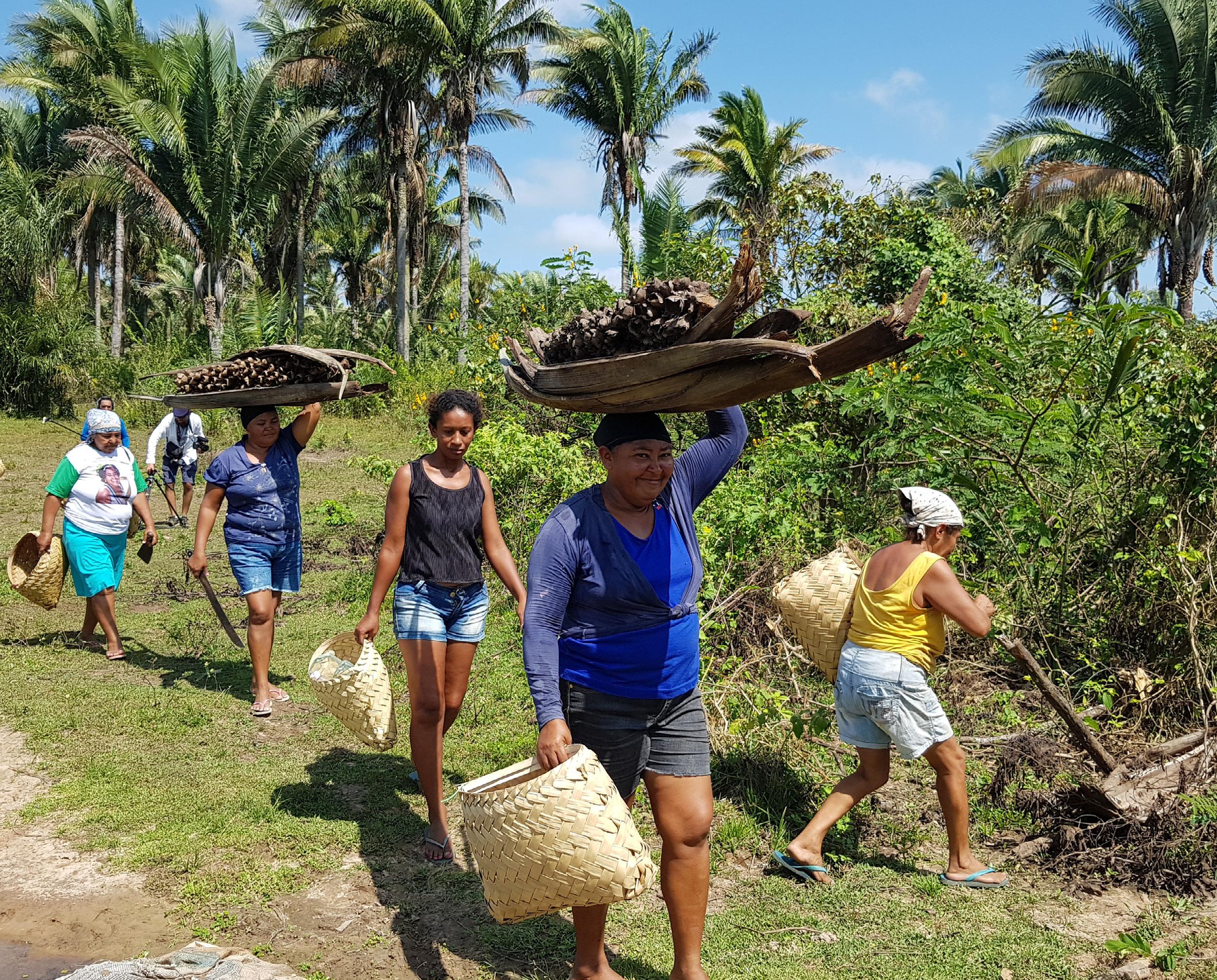
Agronomist Bernardo Tomchinsky, Professor at the Federal University of South and Southeast Pará [Unifesspa], also works with babassu nut breakers, particularly those in Southeastern Pará. According to the professor, the women are organized in the way they carry out their work.
“They have an organizational structure primarily centered on collecting babassu, extractive activities, and the production of babassu based products. Their work is mainly focused on the sustainable use of the fruit and the production of food and handicrafts. In southeastern Pará, there is a collective of organized women in the Araguaia region, encompassing the municipalities of São Domingos do Araguaia, Brejo Grande do Araguaia, Itupiranga, and São João do Araguaia”, the professor explains.
The nut breaker Cledeuneza agrees with that idea. For her, it would make no sense to destroy or waste the community’s main source of income and livelihood. “The palm threes remain standing, we only collect the nuts that have fallen to the ground. We preserve the environment where we work. We also contribute to the bioeconomy because our products are environmentally friendly, including different types of babassu oil and soap. This is important to us because we are contributing to the environment and to biodiversity”, says the extractivist.
Challenges
The sustainable management of babassu goes far beyond contributing to the preservation of the Amazon. The knowledge of the babassu nut breakers also represents the maintenance of cultural practices, ecological knowledge, and production systems that respect nature’s cycles, without demanding accelerated havests to meet high demand from outside the forest.
While sustainability is a guiding principle in babassu extractivism, the same cannot be said about access to the areas where the species grows. Typically, the palms grow on private land and pasture areas, where babassu nut breakers must obtain permission from landowners to collect the fruits that fall to the ground.
Babassu nut breaker Maria de Souza, from Itupiranga, Pará, reports that some owners of private land or areas marked by land conflicts make access difficult for them and contaminate babassu groves.
“Nowadays, we see that our palm trees are being poisoned. Drones spray pesticides. The nuts that fall to the ground are contaminated. So, we cannot collect those products or sell them; anyone who eats them will be poisoned”, she complains.
Legislation protects extractivists
The work and permission that allow babassu nut breakers access to private lands or areas belonging to the federal government are governed by legal instruments aimed at strengthening the group and valuing their activity. One of them is the Política Nacional de Desenvolvimento Sustentável dos Povos e Comunidades Tradicionais [National Policy for the Sustainable Development of Traditional Peoples and Communities], which guarantees these communities free access to natural resources for their subsistence.
Law 10.930/2025, enacted by the government of Pará, also stands out as it recognizes the knowledge and cultural identity of babassu nut breakers as Patrimônio de Natureza Imaterial do Estado [Intangible Cultural Heritage of the state]. The policy helps increase the visibility of this traditional practice, which is also recognized by Instituto do Patrimônio Histórico e Artístico Nacional (Iphan) [Brazil’s National Institute of Historic and Artistic Heritage].
There is also the Lei Babaçu Livre [Free Babassu Law], the main advocacy flag of the Movimento Interestadual de Quebradeiras de Coco Babaçu (MIQCB) [Interstate Movement of Babassu Nut Breakers], which brings together women from the states of Pará, Maranhão, Piauí, and Tocantins, totaling more than three hundred thousand rural workers. The law proposed by babassu nut breakers is already in effect in the states of Tocantins and Maranhão (in the latter, only on public lands), as well as in 18 Brazilian municipalities: four in Tocantins, twelve in Maranhão, and two in Pará.
In general terms, the Free Babassu Law recognizes the rights of babassu nut breakers to the territories where babassu palms grow, allowing free access for collection even on private lands; prohibiting the burning, cutting down, or poisoning of babassu palms; banning the cutting of entire fruit clusters in order to respect the palm’s life cycle; and forbidding the burning of whole nuts to produce charcoal, a practice that threatens the livelihood of babassu nut breakers and the full, sustainable use of the fruit.
Nut breaker Cledeneuza celebrates the achievement of being able to collect the raw material that supports her family, as São Domingos do Araguaia is one of the municipalities in Pará where the law is already in effect. “it guarantees that we can continue our activities, collecting the product on other people’s lands. The law also protects us, allows us to take part in projects, and ensures we are recognized. It helps us gain our space, and machiney to work and produce with quality”, she says.
Science
Following the principle that with babassu nothing is wasted and everything is transformed, Embrapa Maranhão has been investing in projects with babassu nut breakers to develop food products and processes based on the full use of the edible parts of the babassu nut.
According to agronomist Guilhermia Cayres, who coordinates the initiative between 2011 and 2024 consultations were carried out with representatives of around 40 extractive groups, who received visits from researchers, Professors, chefs, and other professionals to better understand the women’s ways of life and work, both in the field and in agro-industrial production.
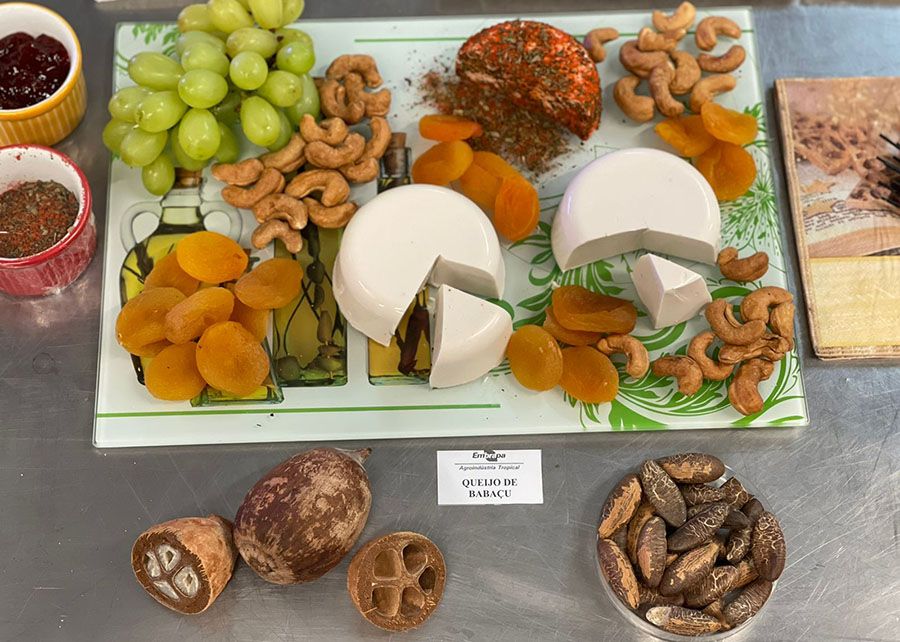
Through this process, new formulations based on babassu activities were developed along with the babassu nut breakers, combining traditional knowledge with technical and scientific expertise. Some examples of these innovative products include ice cream, cookies, hamburgers, almond flour, and plant-based cheese and milk.
Today, they are invited or hired to train new groups and, thus, become a reference in social innovation and the management of community enterprises, serving market niches that value the socio-cultural identity and environmental importance of babassu nut breakers in the conservation of a sociobiodiversity species”, Guilhermina emphasizes.
INSTITUTIONAL PARTNERSHIP
The production of Liberal Amazon is one of the initiatives of the Technical Cooperation Agreement between the Liberal Group and the Federal University of Pará. The articles involving research from UFPA are revised by professionals from the academy. The translation of the content is also provided by the agreement, through the research project ET-Multi: Translation Studies: multifaces and multisemiotics.