In January this year, a federal law officially designated açaí as Brazil’s national fruit. In addition to recognizing the value of Amazonian biodiversity and strengthening the product’s position on the international market, the legislation seeks to prevent the misappropriation of the resource by other countries. In 2003, a Japanese company even attempted to patent açaí, but the registration was later annulled following action by the Brazilian government.
The Amazonian fruit has become increasingly popular both in Brazil and worldwide, not only as a nutrient-rich food but also for other uses, including cosmetics and even pharmaceutical applications.
Despite these advantages, the açaí production chain faces a major challenge: its high perishability after harvest. Just 72 hours after being removed from the bunch, the fruit can no longer be used. A solution, however, has emerged from research conducted at the Universidade Federal do Pará (UFPA) [Federal University of Pará]: the use of a cassava-based biogel which, combined with freezing, preserves açaí for more than six months while maintaining the same nutritional properties and the same flavor as fresh fruit.
THE STUDY
Led by researcher Nathiel Moraes, the study was carried out within the Programa de Pós-Graduação em Ciências e Meio Ambiente da UFPA [Graduate Program in Environmental Sciences at UFPA] during his master’s degree. According to Moraes, the idea for the research emerged from identifying the problem of perishability.
“Both our studies and the literature show that within three days, açaí can no longer be used for anything—neither by the food industry nor by cosmetics manufacturers. Every year, we see quantities of this precious fruit, a superfruit as we already know it, being thrown away by the crate. We therefore had a problem to solve: extending the fruit’s shelf life while preserving its properties as much as possible,” he says.
“Our research group was already working with biopolymers. My advisor, José de Arimateia Rego, had expertise in extending the shelf life of black pepper through coating processes, increasing its durability from two or three years to ten. For açaí, however, a different process had to be developed: the biogel,” Moraes recalls.
The biopolymer is made from cassava starch
According to Moraes, coating processes to preserve fruit are already a well-established line of research, not only for black pepper. “But we realized that this approach would not work for açaí, because the fruit would ferment. The first step, therefore, was to adapt the polymer. That was when we created a biopolymer from cassava starch, which also comes from an Amazonian production chain,” the researcher explains.
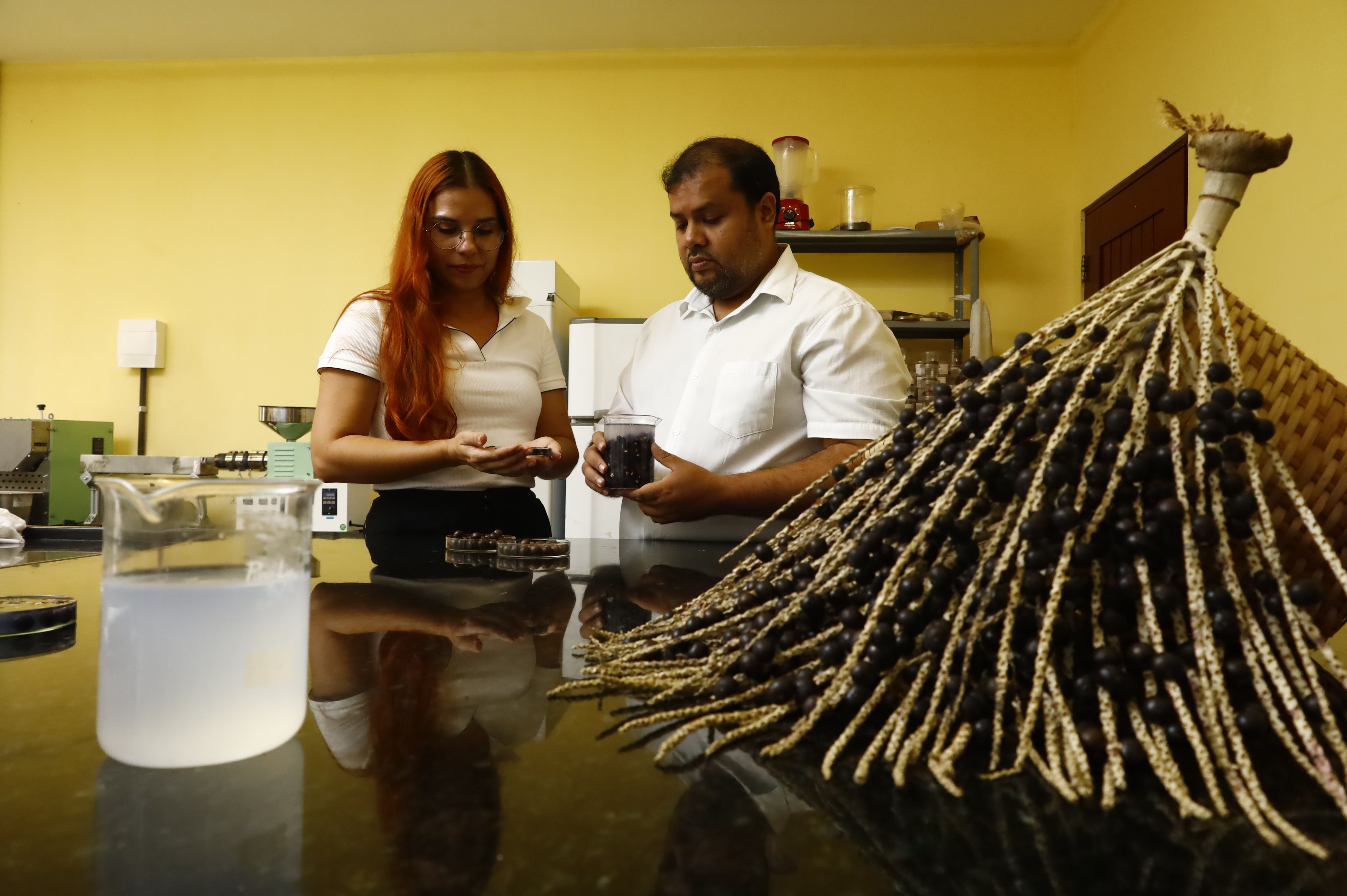
A series of tests were carried out until the ideal form of the biogel and its application to the fruit were identified—a technique for which a patent application has already been filed with the Instituto Nacional da Propriedade Industrial (INPI) [Brazil’s National Institute of Industrial Property]. From there, testing with açaí fruit began.
Three groups of fruit were tested. The first was kept at room temperature and showed degradation within three days. The second group was frozen in a standard household freezer and, over the months, showed both visual changes and shifts in the concentration of bioactive compounds. These results corroborated what the literature indicates: although freezing slows metabolism and microbial activity, it also damages plant tissues due to the formation of ice crystals.
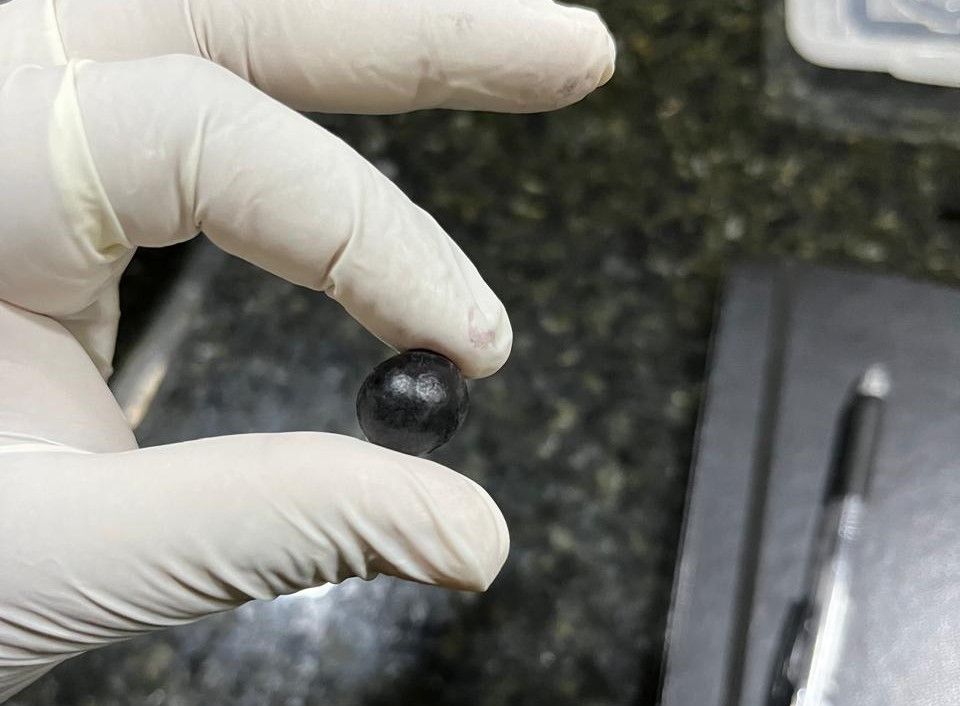
The third group, coated with biogel and frozen in the same freezer, delivered the best results after six months. It not only retained the same appearance as fresh fruit but also slowed the chemical degradation of bioactive compounds. In addition, a liquid accumulated at the bottom, with the same properties as the biogel-coated fruit. Moraes has since extended the preservation period to one year as part of his ongoing doctoral research, with similarly promising results in terms of maintaining the fruit’s original properties.
Technique mimics the work of the tree
According to industrial chemist Fabrine Alves, who also took part in the research, the technology was designed not to actively interfere in the process, but rather to allow the chemical elements already present to interact. “We realized that it is as if the gel does the work of the tree, reproducing the conditions under which bioactive compounds are most intensively produced in açaí while it is still on the plant,” explains the postdoctoral researcher.
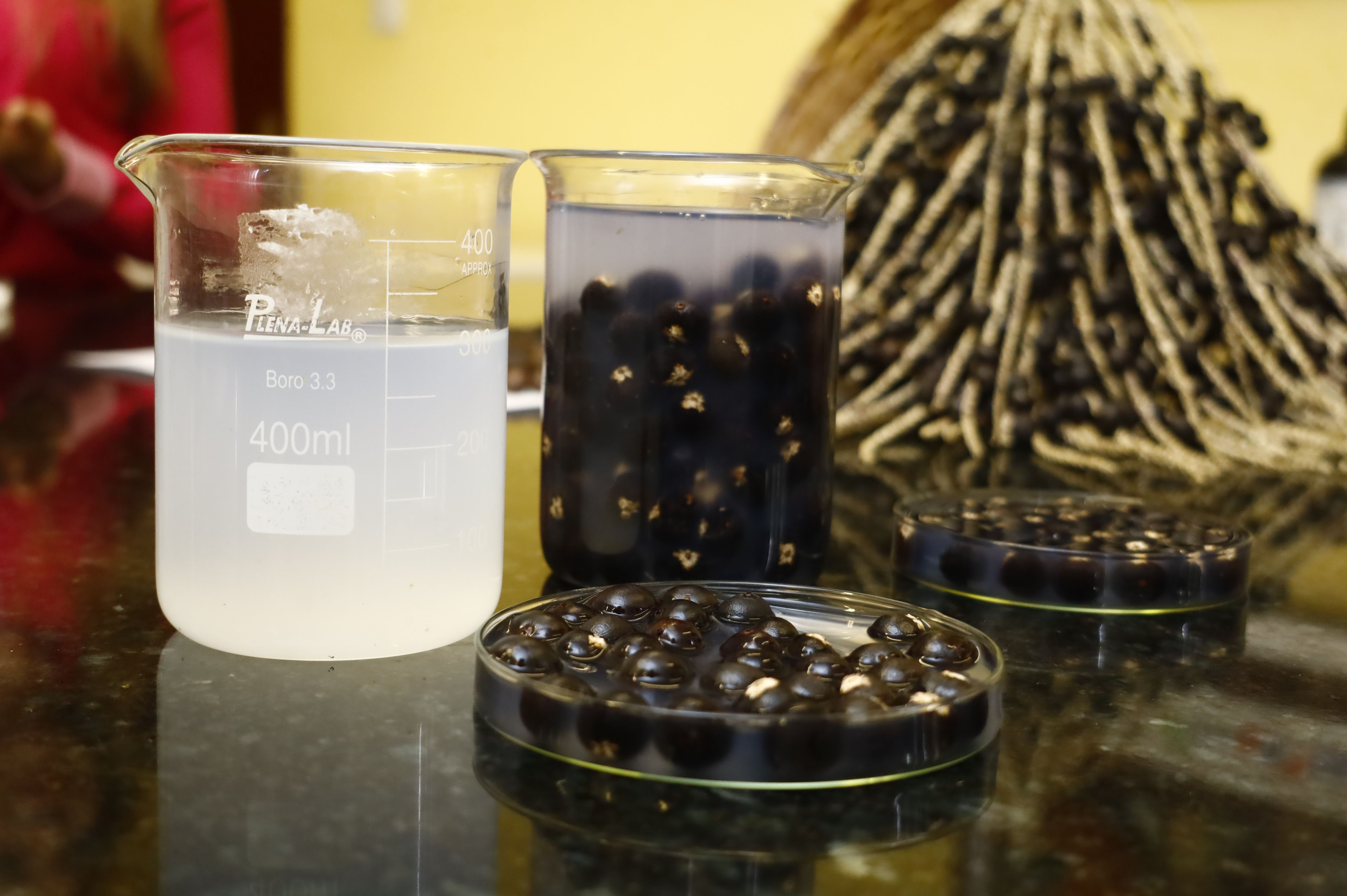
In this sense, Moraes explains that the biogel can not only preserve but also enhance bioactive compounds. “The biogel does not increase fruit yield, but it proved very effective in increasing the amount of bioactives. It is as if the fruit were lying on a healthy bed, as though it were still on the tree, and that bed gave it another six months to keep working and producing even more bioactive compounds. That is why its color remains so vivid even after six months,” he explains.
Not only does the color remain unchanged—the flavor does as well. “The gel does not alter the taste at all. We carried out tests by processing fresh açaí and biogel-treated açaí and conducting sensory evaluations in the laboratory, and the flavor was the same. Beyond that, we took the fruit to an açaí processor at a street market without explaining what it was. She processed the fruit removed from the biogel and said, ‘This is fruit from the current harvest,’” the researcher recounts.
For Moraes, this represents a way of preserving Amazonian food culture by maintaining traditional forms of consumption and the açaí flavor preferred by local consumers. “There is also industrialized açaí, which is usually pasteurized and has a long shelf life. But it completely changes the flavor,” he notes.
Initiative strengthens the production chain
Alves emphasizes the economic and social importance of the discovery. “This technology can mainly help small-scale producers by preventing losses, because sometimes the fruit does not arrive in time, or in sufficient quality, to be taken to processors. Riverside collectors need to sell their açaí as quickly as possible. They cannot plan for better sales or higher profits. The first middleman who appears is the one they sell to. With the biogel and a freezer—which most people already have—they can wait and sell later for a better financial return. We believe universities have a role to play in reshaping the future, and this technology can do exactly that,” the researcher argues.
According to Moraes, the biogel can further boost the production chain. “Açaí is already the second-largest commodity in Pará, second only to mining, and it affects the lives of many families. We want to create a product that is accessible to small producers—a social technology. We have already gone through several stages and are now presenting it to regulatory bodies such as the Ministry of Agriculture and Livestock and health surveillance authorities. The next step is to break out of the bubble and move from applied research to industrial-scale production. That is where investment comes in, whether private or public, and we are already seeking that,” he says.
Moraes also notes that the preservation provided by the biogel can help address the off-season. “One of the tests we conducted focused on this. We received fruit from the harvest, preserved it, and removed it from the biogel at the beginning of the following harvest. It came out exactly as it went in, with the same quality. We wanted to prove that it was possible to take fruit from one harvest and make it last until the next. If I can keep it exactly as it entered, throughout the entire off-season, then at any point during that off-season I can remove it from the biogel and process it, and it will be preserved. I have a high-quality product even in the off-season,” he says.
“The results are very promising,” says extractive producer
The açaí used in the research was harvested in Igarapé-Miri, the municipality with the highest production in the state of Pará. Letícia Melo, a riverside resident of a community on the banks of the Meruú River in the rural area of the municipality, comes from a traditional extractive family that was one of the suppliers for the study. After Nathiel Moraes defended his master’s dissertation, the producers who supplied the fruit were invited to visit the laboratory and learn about the technology.
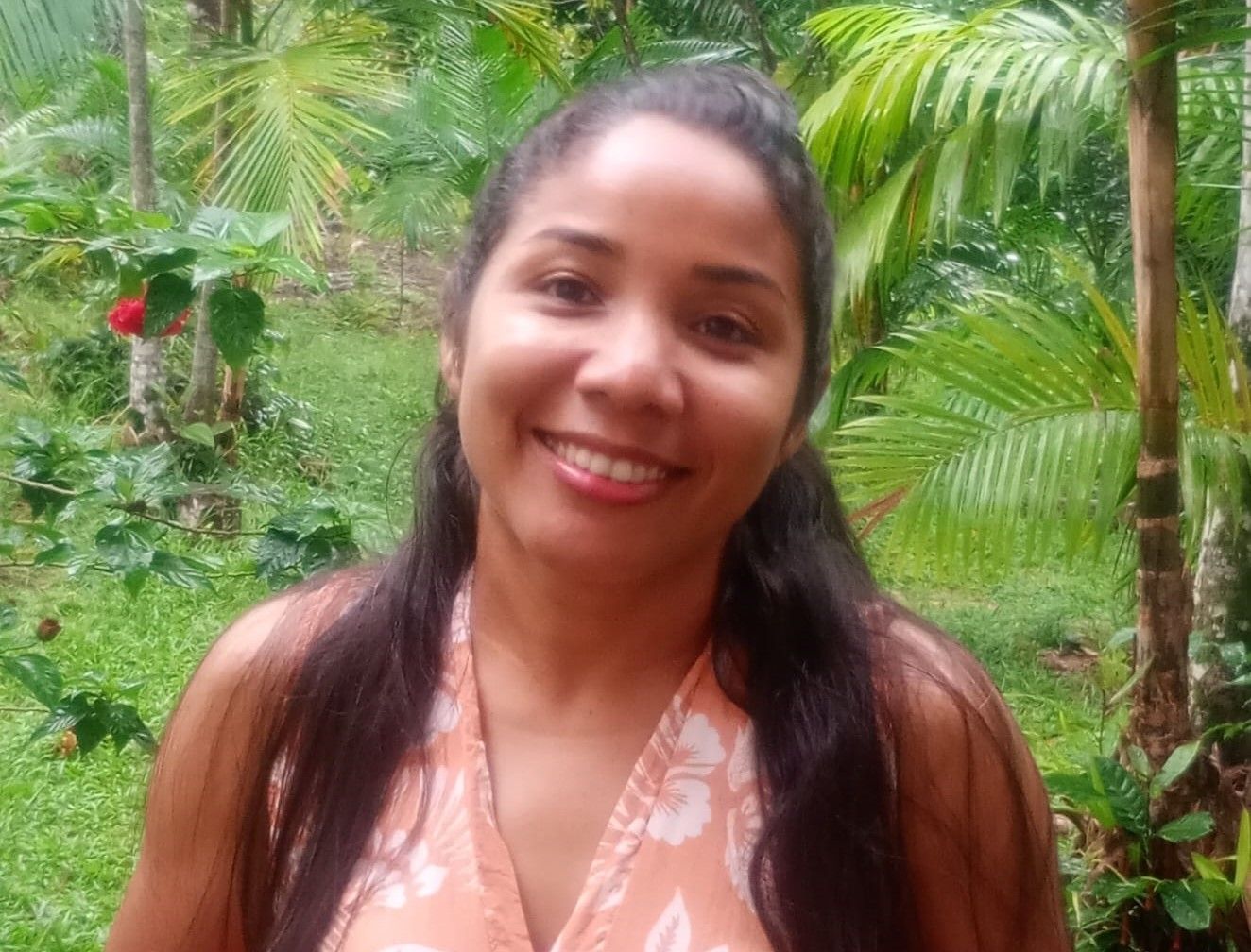
“The biogel coats the small açaí fruit, acting as a layer that slows aging and oxidation. And it is made using natural inputs from our own region. We followed part of this project and can see that the results are very promising,” Letícia celebrates.
“Our community, for example, is far from major consumer centers and processing industries, and the logistics of delivering this product involve risks that can compromise fruit quality, because just two days after harvest the fruit already dries out and loses mass and flavor. With the biogel, this problem of perishability can be solved. What I believe is still lacking is major investment to make it possible to produce this innovation at scale and make it accessible from the very base of the production chain, strengthening this major branch of the Amazon bioeconomy,” the producer hopes.
INSTITUTIONAL PARTNERSHIP
The production of Liberal Amazon is one of the initiatives of the Technical Cooperation Agreement between the Liberal Group and the Federal University of Pará. The articles involving research from UFPA are revised by professionals from the academy. The translation of the content is also provided by the agreement, through the research project ET-Multi: Translation Studies: multifaces and multisemiotics.