A typically Amazonian fruit, bacuri, was once a recognized success at banquets offered at Itamaraty, the Ministry of Foreign Affairs, in the early 20th century. At the time, the agency was headed by Barão Rio Branco, a great admirer of the fruit. Since there wasn't enough time for the fresh bacuri to reach Rio de Janeiro, the capital of the country at the time, the fruit was consumed in the form of compote, as a dessert at these banquets, usually with French names to give the delicacy an air of sophistication.
This historical account is given by scholar Urano de Carvalho, an agronomist at the Empresa Brasileira de Pesquisa Agropecuária (Embrapa) [Brazilian Agricultural Research Corporation] Eastern Amazon, in Belém. The expert, a researcher of the fruit, was one of those responsible for creating a technology that promises to boost the bacuri production chain not only in Pará, the largest national producer, but also in other Brazilian states.
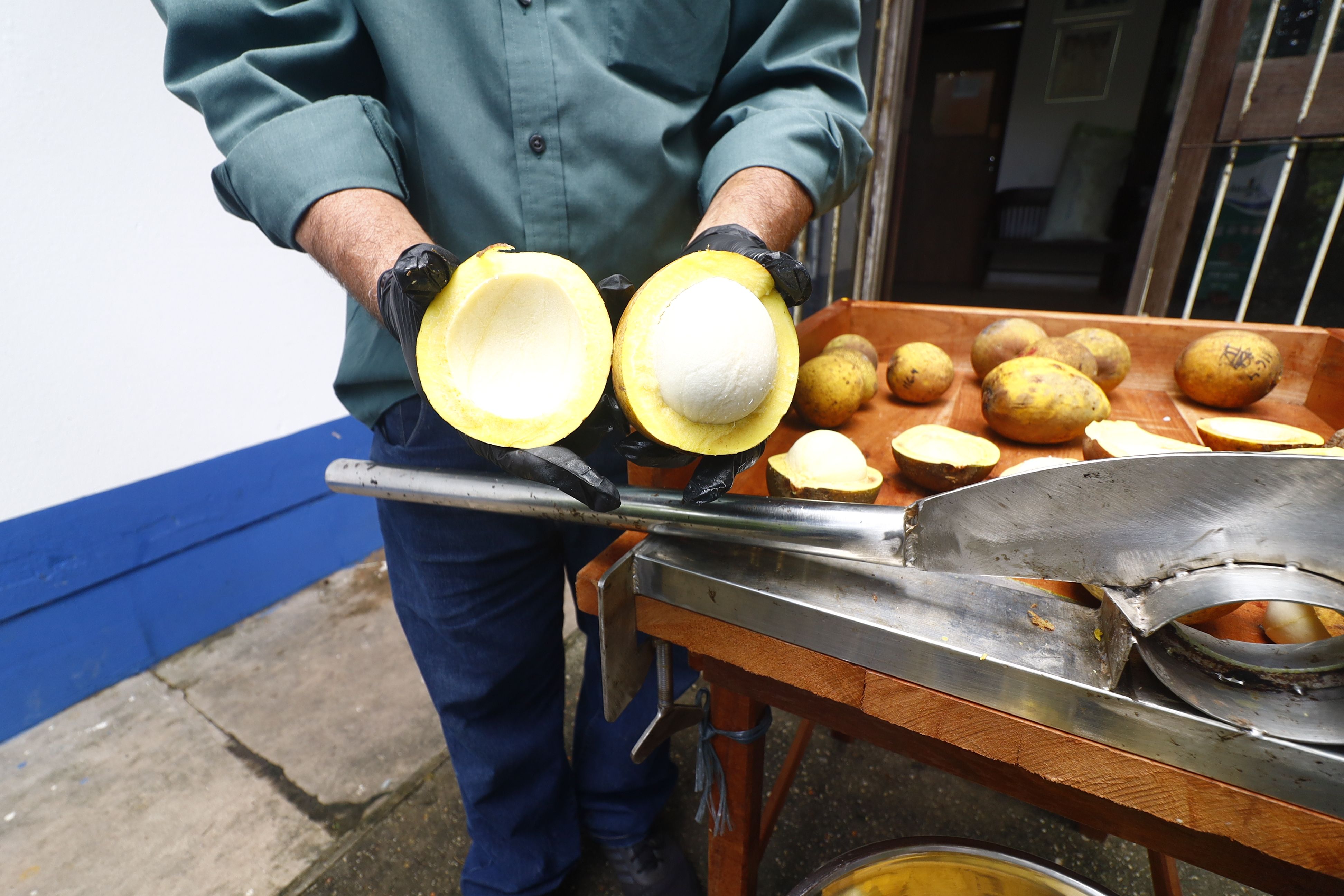
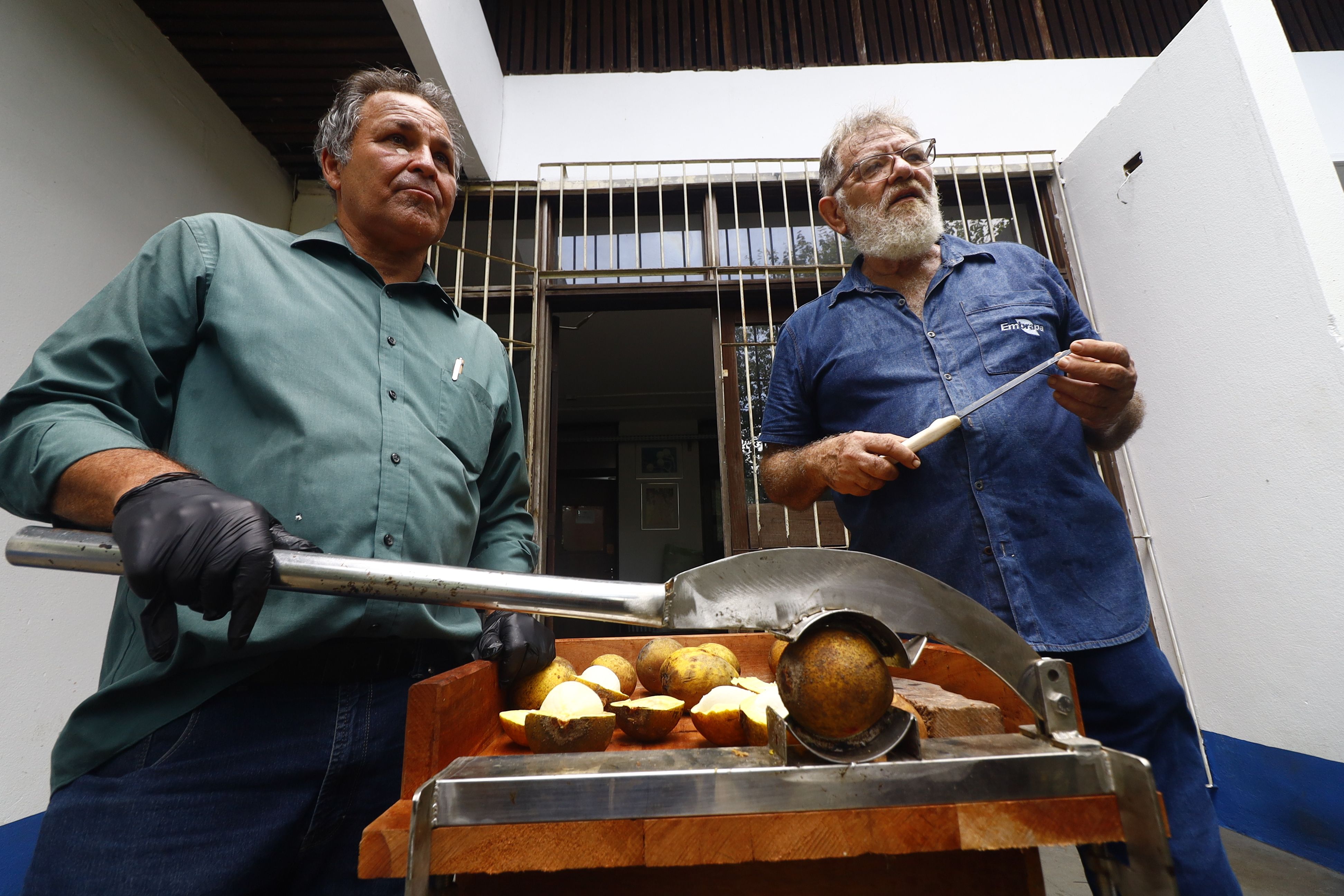
The technology, for being simple and not patented, allows it to be reproduced by anyone interested. It is a tool that allows the bacuri to be cut more quickly, practically, hygienically and with greater preservation of the pulp, called a bacuri breaker.
EQUIPMENT
According to Carvalho, the opening of this hard skin fruit is traditionally done in two ways, both laborious and unsafe: either with a machete or with a club, in the latter case, by hitting it. “It is a time-consuming process that requires labor, which is sometimes very difficult in rural areas. And, with these opening methods, a resin is often released, especially when the fruit is split transversely, and this resin causes a bitter taste in the pulp. The process carried out with a machete can also injure the seed, which also contains resin. With this machine, the fruit opens easily and without causing major damage,” explains the researcher.
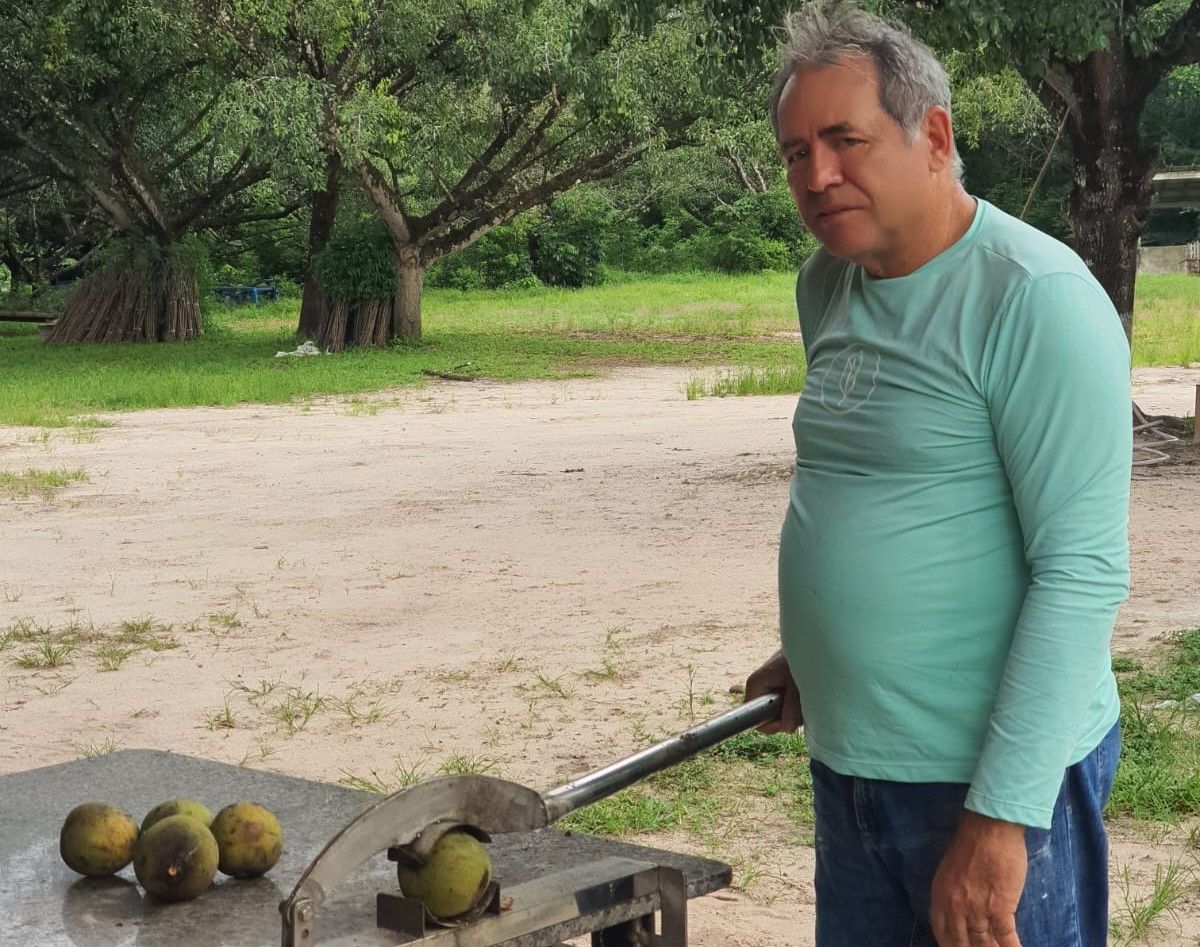
The machine works under the same logic as a paper guillotine: the fruit is positioned on a support and a lever connected to a blade, which, when pressed down, cuts the fruit in an incision, without causing major damage to the peel or seed.
The equipment was developed by Embrapa researchers, with funding from the Superintendência do Desenvolvimento da Amazônia (Sudam) [Superintendency for the Development of the Amazon] and assistance from an açaí pulp company, in whose workshop the prototype was developed.
“Initially, our commitment was to provide 20 machines to communities that work with bacuri, offering a model that could be copied. Some municipalities have already taken the initiative to manufacture their own machines, such as Bragança. But other municipalities in Pará have also benefited, such as Augusto Corrêa, which is the largest producer in the state. We discovered that, with the dissemination on social media, this equipment has already been reproduced even in Piauí, which is also a producing state,” reports Carvalho.
Pará produces 90,000 tons of the fruit per year
According to Urano de Carvalho, the center of origin of the bacuri fruit is likely to be the state of Pará. “But it also occurs in practically all of the Brazilian Amazon and in part of Northeast Brazil, especially in the states of Maranhão and Piauí. It also occurs in other countries, such as Guyana, Suriname, French Guiana, Bolivia, and Peru, but generally in areas of primary forest, where the number of individuals is very small, less than one plant per hectare,” says the agronomist.
Pará produces around 90,000 tons of the fruit per year, which corresponds to 9,000 tons of pulp. “The percentage yield of pulp in each fruit is very low. From every 100 kilos of fruit, you get 10 to 12 kilos of pulp. Cupuaçu, in comparison, yields 35 to 45 kilos of pulp,” says Carvalho. Pará is the largest producer, followed by Maranhão, Tocantins, and Piauí. Within the territory of Pará, two producing regions stand out: the northeast of the state, with highlights including Augusto Corrêa, Bragança, Maracanã, and Viseu, and Marajó Island, especially Soure and Salvaterra.
According to Alfredo Homma, a retired agronomist from Embrapa and one of the researchers involved in creating the breaking machine, bacuri production is still very low. “This quantity is very small when compared to the fact that Pará produces 750,000 tons of açaí pulp per year and an estimated 15,000 tons of cupuaçu pulp,” he exemplifies. “This makes bacuri pulp the most expensive in Pará and in the country, reaching R$ 60 per kilo in supermarkets, even with added water. Meanwhile, a kilo of the fresh fruit can reach R$ 11, with the peel and pit accounting for almost 90% of the weight,” he adds.
Embrapa guides improvement and management
According to Carvalho, almost all bacuri production in Pará still comes from the extraction of native bacuri trees. "Something between 92% and 95% comes from this source," he indicates. This would be the reason why the popularity of bacuri has decreased in Belém. "Until the 1960s, bacuri was consumed more than cupuaçu in the capital, but, over time, the situation reversed, because cupuaçu began to be cultivated and bacuri continued to depend on extraction," he recalls.
But some farmers, on a small scale, are already planting bacuri trees. The largest initiative is in the municipality of Aurora do Pará, with a planting of 9,000 plants, all using the techniques recommended by Embrapa. "The producer there did not do it through seedlings. He sowed seeds and then grafted, planting 65 clones in that area," says the researcher. The clones used are the result of selection for genetic improvement. "Within our germplasm bank [a collection of plant genetic material], we have already identified plants that produce fruits with up to 27% pulp," emphasizes Carvalho.
In addition to genetic improvement, Embrapa also provides guidance on plantation management. "The bacuri tree has the ability to reproduce both through seeds and through its roots. The plant sprouts naturally from the root, and this ends up generating many trees per hectare. In management, we leave 100 plants per hectare, removing excess sprouts. We already have more than 300 hectares planted with this system," says Antônio Menezes, also an agronomist at Embrapa. "We are conducting training, capacity building, showing the potential of the species. We have already conducted 70 courses, with more than 2,000 people trained," he reports.
Embrapa also uses grafting techniques, which reduce production time. A grafted seedling begins to produce fruit in four or five years. A seedling grown from seed takes eight to ten years to produce bacuri,” emphasizes Carvalho.
REGENERATION
For the specialist, the bacuri tree is also an excellent option for the natural regeneration of forests. “It can be used in the reconstitution of legal reserves, giving economic value to this environmental protection. The idea is to take advantage of those plants that grow naturally in areas where bacuri existed or exists, because it has a great capacity to regrow from the root, and to reconstitute legal reserves without planting anything. The plant is already there in nature, just requiring to be managed. There is even a hypothesis that the bacuri tree is a species prepared for global warming. Its characteristics indicate that it has already suffered pressures over time and has been selected to resist droughts and high temperatures. "Proof of this is that natural dispersal reaches even the driest areas of Pará," he explains.
"It's a guaranteed market"
According to Urano de Carvalho, bacuri is considered by many to be the best fruit in the Amazon. "It hasn't yet achieved greater prominence because it's a more difficult species to cultivate and has a slower production rate. It's still little known outside the Amazon, but it has aroused a lot of interest. Demand has been much greater than production capacity. Ordering from outside the country cannot be met by the industry. It's a fruit with low production and great acceptance," he says.
For Alfredo Homma, it is necessary to manage at least 50,000 hectares of bacuri trees. “It’s a guaranteed market. Currently, the pulp industries in Pará don’t risk exporting because the amount of fruit available is very small. And, because it comes from extractive activities, it has an irregular supply, with a harvest that varies according to the year,” he argues.
In addition to food consumption, bacuri has already been used in other ways. “The vegetable oil industries in the Amazon have used bacuri seed oil in the production of cosmetics, soaps, and moisturizing creams. Among Amazonian vegetable oils, it is the one that currently achieves the highest market price,” says Carvalho.
IN PRACTICE
In addition to all the techniques described, the bacuri-crushing machine is one of Embrapa's initiatives to boost production capacity. According to Carvalho, the proposal to develop the equipment was to facilitate a process that, manually, occurs slowly and is costly. “The day bacuri is produced on a large scale, this machine will make extracting the pulp much more practical. It also allows for a more hygienic process with less risk of accidents,” Carvalho points out.
PULPING MACHINE
The family of Francisco Douglas Cunha, from the Macaco community in the municipality of Augusto Corrêa, was one of those that received the pulping machine. “We are producing five to seven thousand bacuri fruits per year. Part of it is sold fresh. Now, with the machine, it has become much easier for us to remove the pulp, which has a good market value. It has made a big difference, firstly because of hygiene, and secondly because it makes cutting much faster. Now, we need a machine that helps remove the pulp, which is still done with scissors.”
According to Urano de Carvalho, this is the next challenge for the research team: the bacuri pulping machine.
INSTITUTIONAL PARTNERSHIP
The production of Liberal Amazon is one of the initiatives of the Technical Cooperation Agreement between the Liberal Group and the Federal University of Pará. The articles involving research from UFPA are revised by professionals from the academy. The translation of the content is also provided by the agreement, through the research project ET-Multi: Translation Studies: multifaces and multisemiotics.