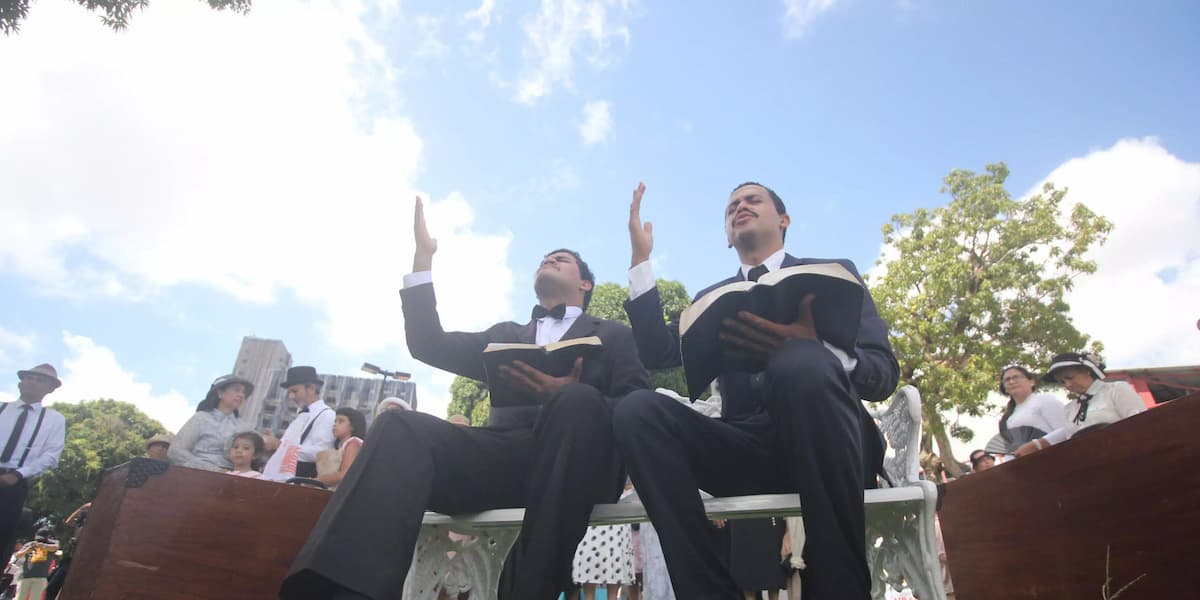
The Amazon that comes to life in the comic books produced across the region defies clichés and exotic portrayals. From Belém's urban legends and brega culture (A popular musical genre and cultural movement from Northern Brazil, known for its romantic themes, vibrant aesthetic, and synthesized beats) to the lived experiences of riverside communities; from Indigenous cosmologies to the everyday lives of Japanese immigrants in rural Amazonas, local comic artists prove there are many Amazons within the Amazon. For them, comics are more than mere entertainment: they are a powerful tool for self-identity, belonging, and confronting the region's historical erasure.
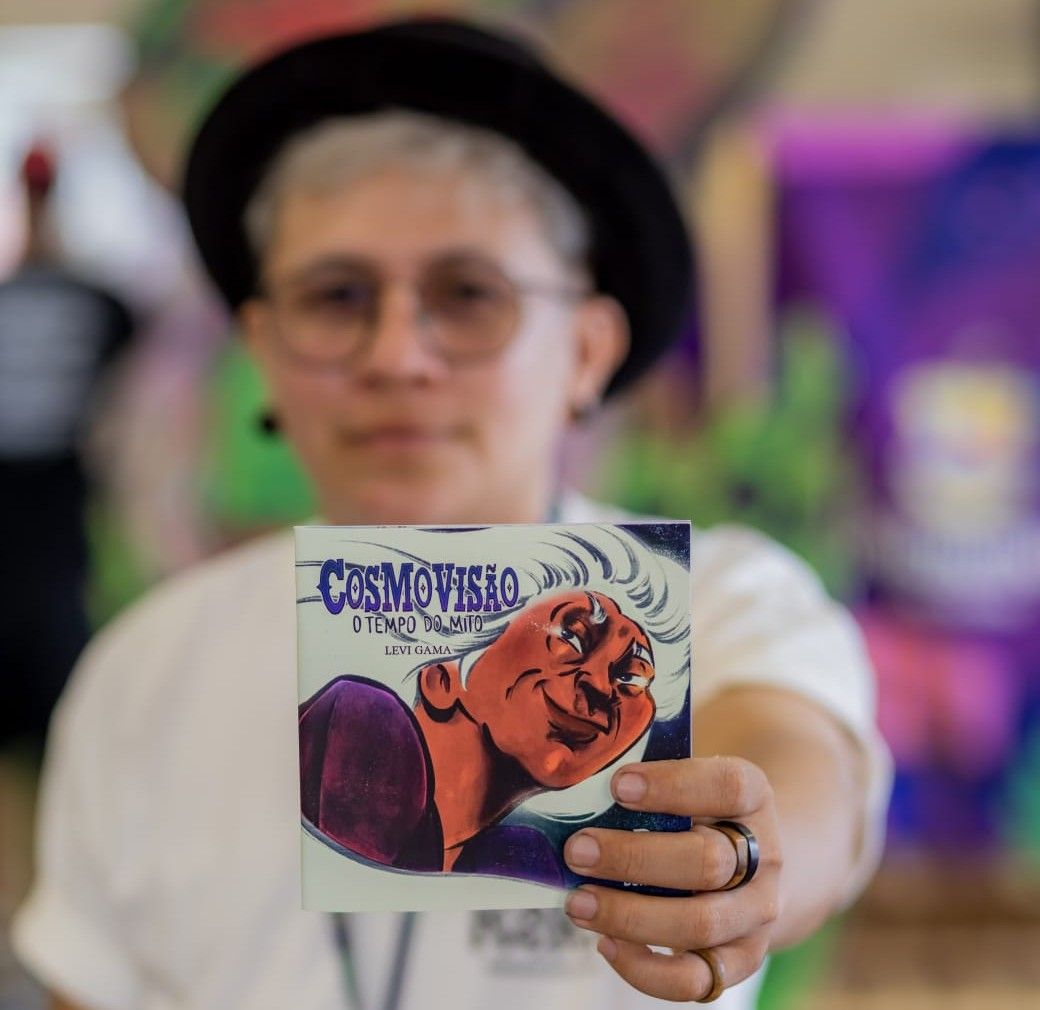
That is the reality for comic artist, illustrator, and muralist Levi Gama, an Indigenous man of the Kokama ethnic group from Parintins, Amazonas. He explains that his work is primarily aimed at Amazonians. He is the author of the comic “Histórias e Mitos Indígenas da Amazônia” [Indigenous Stories and Myths of the Amazon], which depicts the cosmologies of the Sateré-Mawé and Mura peoples. “After its release in 2021, we visited the villages, and the children and youth looked at the pages and saw how much the characters resembled them, their relatives, and the people they live with every day. I decided that whatever I created had to first be something to share with my community before showing it to other states or people from outside my land,” he says. His latest work, released this year, is “Cosmovisão: o tempo do mito” [Cosmology: The Time of Myth], which brings together creation myths from the Desana and Yanomami peoples.
COLLECTIVE
Levi Gama is one of the comic artists in Norte em Quadrinhos, a collective founded by Amazonian publisher and producer Sâmela Hidalgo, who is now based in São Paulo working in the comic publishing industry. The initiative is also co-led by Tai Silva, an illustrator and comic artist from Belém.
“Norte em Quadrinhos exists to bring together comic artists from across the region who previously didn’t know each other. The idea was to unite us as a collective, initially through a virtual community, which later expanded into physical spaces. We started mobilizing artists because we knew there was immense talent here, but it was invisible to the national market, which is concentrated in the South-Southeast axis where major industry events take place. For example, the Belo Horizonte International Comic Festival now features a Norte em Quadrinhos booth, the only regional booth there,” says Tai Silva. “Our Amazonian artistic production is peripheral by nature; we face real hurdles. Through Norte em Quadrinhos, we were able to find each other and get organized,” adds the comic artist from Pará.
CIRCUIT
Another initiative uniting Amazonian artists and driving the production and distribution of comics across the region is the Circuito Amazônico de Quadrinhos [Amazonian Comic Circuit], which held its first two editions in 2025 and 2026. “There were already several isolated events happening, like Pará's National Comic Week or others in cities like Manaus and Macapá. But they didn't follow a fixed schedule on the national calendar. Because of that, the only attendees were local residents. So Evaldo Vasconcelos and Andrei Miralha came up with the idea to integrate these events into a single circuit,” recalls Tai Silva.
Currently, the Circuit includes the Semana do Quadrinho Nacional do Pará [Pará National Comic Week] in Belém; the Semana do Quadrinho Nacional do Amapá [Amapá National Comic Week] in Macapá; the Feira Teiú de Quadrinhos Brasileiros [Teiú Brazilian Comic Fair] in Palmas; the Feira Roraimense de Quadrinhos [Roraima Comic Fair] in Boa Vista; the Semana do Quadrinho Nacional de Manaus [Manaus National Comic Week]; and the Feira Parintins Encantada [Enchanted Parintins Fair] in the city of the same name. The 2027 edition has confirmed dates, spanning from March to May of next year.
“From the moment you bring all these collectives and states together under the umbrella of the Circuito Amazônico de Quadrinhos [Amazonian Comic Circuit], you build a traveling event with a unified visual identity, communication style, and shared agendas. But it’s also an initiative that bridges comic books, tourism, and political awareness regarding what the Amazon is, what the North represents, and the sheer diversity of the region. And we managed to get onto the national event calendar. The Circuit was even honored with the Troféu Angelo Agostini, a major national award in the field,” celebrates Tai Silva.
Independent production due to lack of support
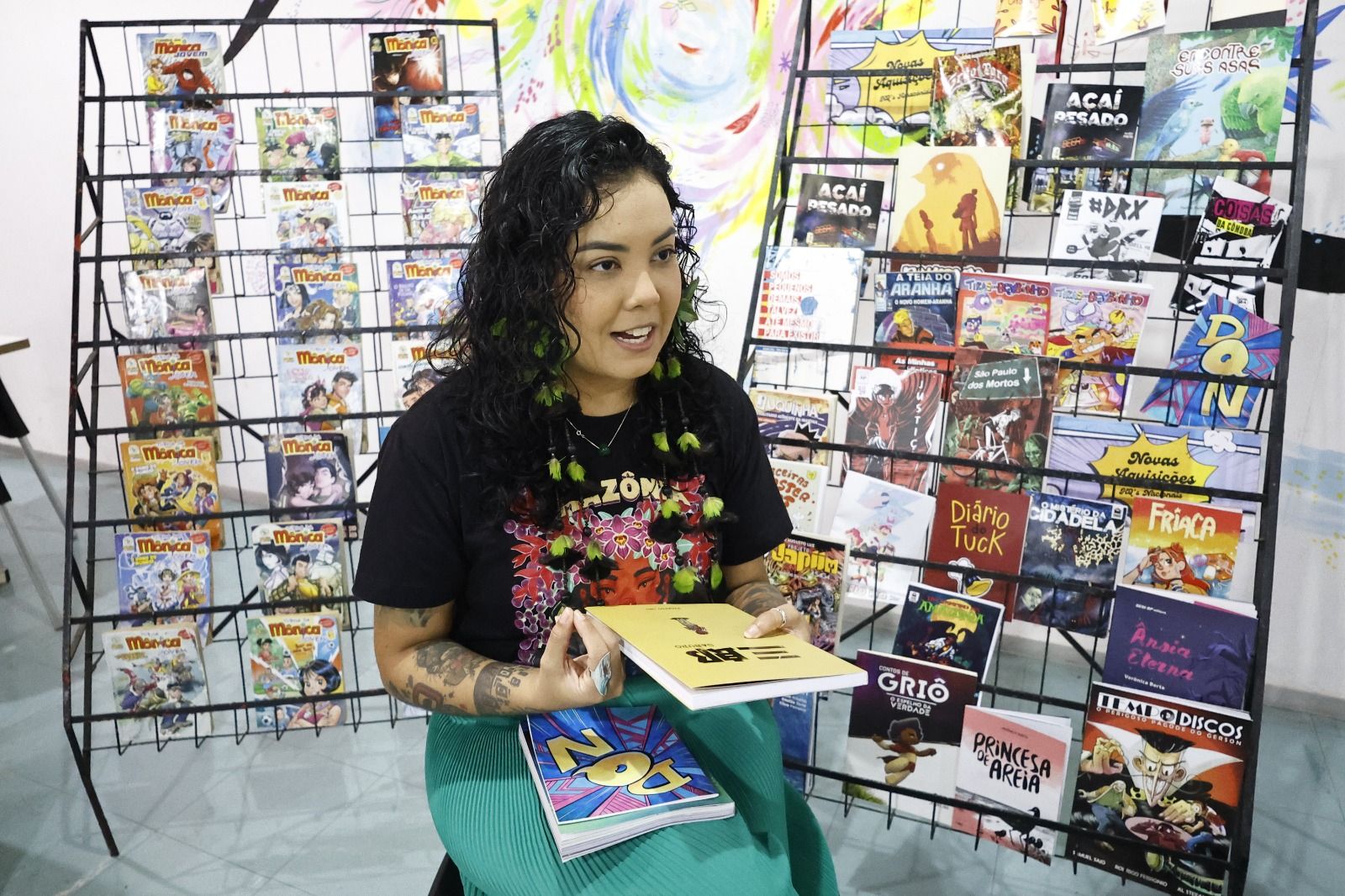
The comic artist from Pará highlights that due to a lack of visibility and support, most comic production in the region ends up being independent. “We face structural challenges with printing and distribution. Everything is more expensive in the North. So the problem starts right away with how we're going to get these comics to readers. The market here is primarily independent because major publishers rarely step in. Hardly any of our comic creators are published by major labels. This forced us to develop a strong capacity within independent publishing, learning to do a bit of everything across all stages of production and promotion,” explains Tai Silva.
For her, the Norte em Quadrinhos booth at out-of-state events has helped break down barriers. “The publications make it to the booths even if their authors can’t go in person. There, our comics get discovered and sold. And when it comes to awards, curators vote for creator names they recognize. If they don't know artists from the North, they'll never vote for us. But that’s been changing, the number of Northern artists among award nominees has been growing, and last year we actually won,” she says.
Tai Silva is referring to her own graphic novel, Onde Habita o Medo (Where Fear Dwells), a 200-page full-color book that has already won four national awards, including the HQMIX Award, the premier Brazilian award in the field. The release was only made possible through crowdfunding.
Amazonian stories and self-discovery
“Onde Habita o Medo is a tribute to my family history,” says the comic artist. “It follows four children investigating disappearances in the countryside who uncover a curse haunting their village. Along the way, these kids connect with indigenous ancestry and the encantados [spiritual entities of local folklore]. They go on a journey of self-discovery, learning about where they came from and why preserving this past matters, because without it, memory fades. And that only deepens the erasing of our history and identity that's already taking place.”
For her, comic books help show that Northern lived experiences are extremely diverse. “Onde Habita o Medo has the issue of Indigenous ancestry; on the other hand, the comic Saburó, by Ricardo Ono, speaks about Japanese immigration in the Amazon. And there are totally urban narratives, like Semana do Cão, by Mandy Modesto, which tells the story of a little dog that gets lost on the streets of Belém, passes through tourist spots, in a humor that is made for us. Because it is no use being read only externally if it is not read by the people here, because what we do is also for our own people. But we also gain national reach, as in the case of Brega Story, by Gidalti Jr., which is being adapted by Globo,” lists Tai Silva.
According to Levi Gama, comics created in the region allow Northerners to see themselves, in a journey of self-discovery. “People are beginning to detach a bit from narratives outside our state or even outside our country, and they are starting to see what it is like to produce a story, a comic book, through our own lens, our own perspective,” he emphasizes.
BEING NORTHERN
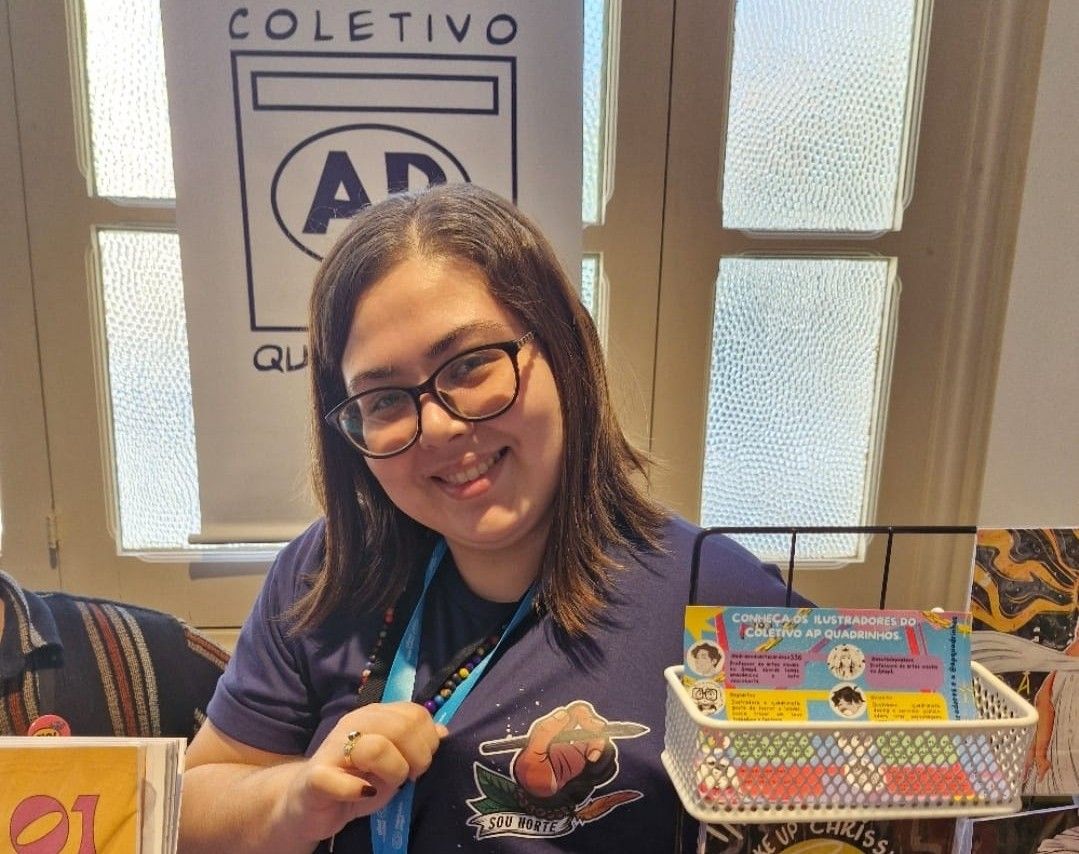
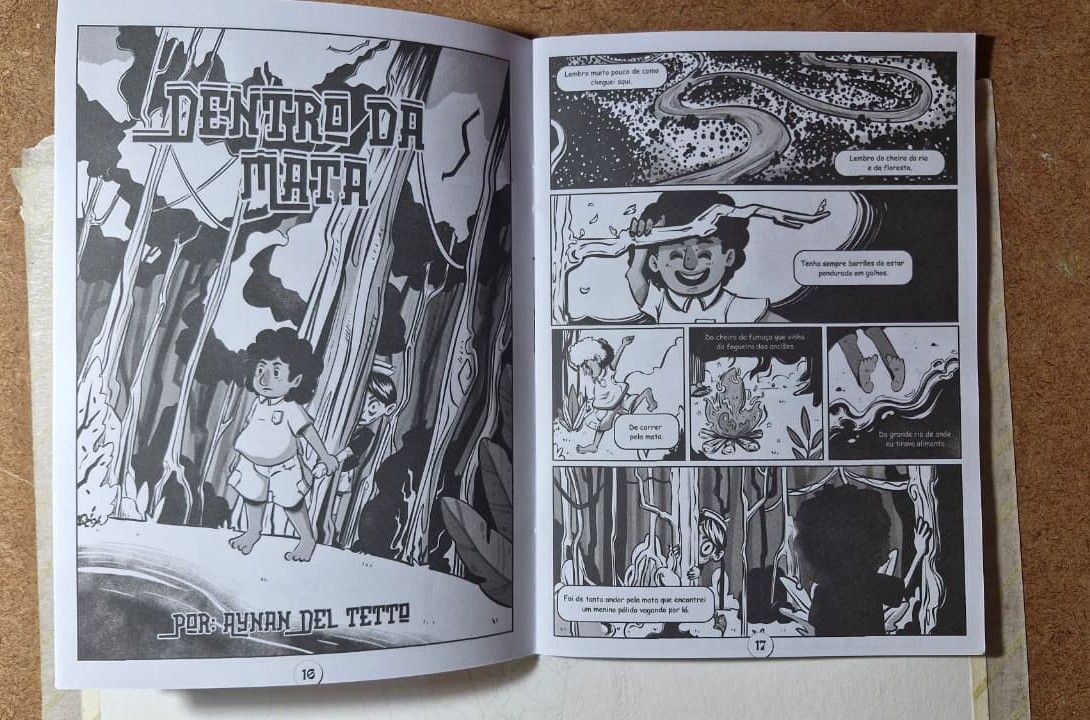
According to illustrator, visual artist, and comic creator Aynan Del Tetto, from Macapá, comics help show what it truly means to be Northern. “It’s not just the stereotype, the tacacá, Joelma, brega. Not that those are bad; it’s a very welcome aesthetic. But it’s not a monolith. Amazonas is not the same as Pará, which isn't the same as Amapá. It’s important to showcase all this culture through comics, to show that we aren't only Indigenous: we are Black, Asian, Mixed-race. Aynan is one of the co-authors of Causos no Meio do Mundo [Tales from the Middle of the World], published by members of the Coletivo AP Quadrinhos, and posts fanzines and webcomics online.
Researcher proposes Public funding calls for comics
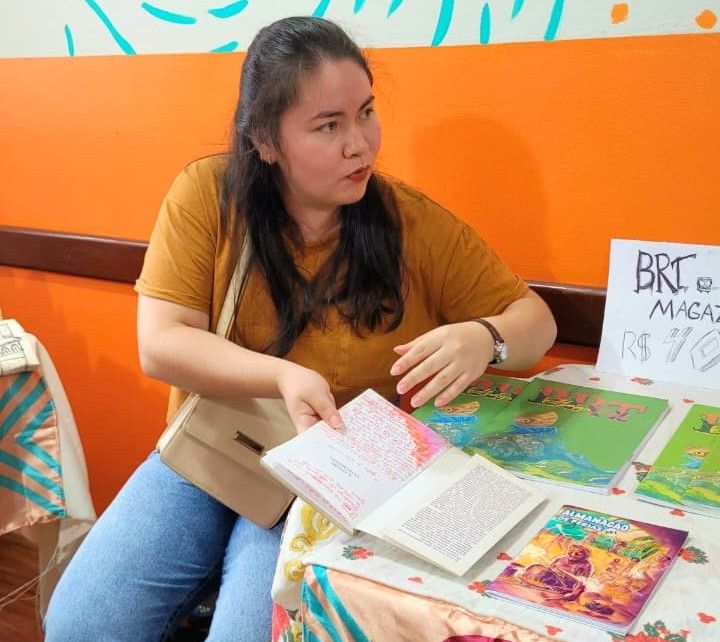
Aline Sousa is a doctoral student in the Post-Graduate Program in Communication, Culture and Amazonia, at the Federal University of Pará (UFPA). For her thesis, she has been studying the comic scene in Pará, based on the existence of collectives. The researcher seeks to understand how networks among artists, forms of sociality, as well as cultural creation and circulation are constructed. She focuses specifically on studying five specific collectives: Açaí Pesado, Capivara Astronauta, BRT, Kitnet and Serendi, the last one made up only of female comic artists.
Through her research, the doctoral student identified several hurdles faced by local comic artists. “They point out that there are no public funding calls specifically tailored for comics. As a result, they have to compete under literature or visual arts categories. Some try to adapt their work to fit the criteria required by those grants, such as general illustration, and end up straying from the comic book medium,” she laments.
The researcher suggests implementing dedicated funding calls for comic books. “Public authorities need to recognize that these artists are actively creating, and support these creators by hosting exhibitions, running workshops, and leading initiatives that foster the comic book scene,” she recommends.
Aynan Del Tetto agrees on the need for structural support. “Here in Amapá, specifically within my collective, we've been trying to help people understand what comics really are. Once the public gets it, government authorities start to understand, too. Because there’s still this persistent stereotype that it’s just a hobby, they don’t treat it as a profession. It’s an uphill battle to make people realize that comics are a legitimate part of culture and deserve public backing. Comics are often called the ninth art, yet sometimes we feel sidelined from the cultural sector altogether. It's a major challenge.”
INSTITUTIONAL PARTNERSHIP
The production of Liberal Amazon is one of the initiatives of the Technical Cooperation Agreement between the Liberal Group and the Federal University of Pará. The articles involving research from UFPA are revised by professionals from the academy. The translation of the content is also provided by the agreement, through the research project ET-Multi: Translation Studies: multifaces and multisemiotics.