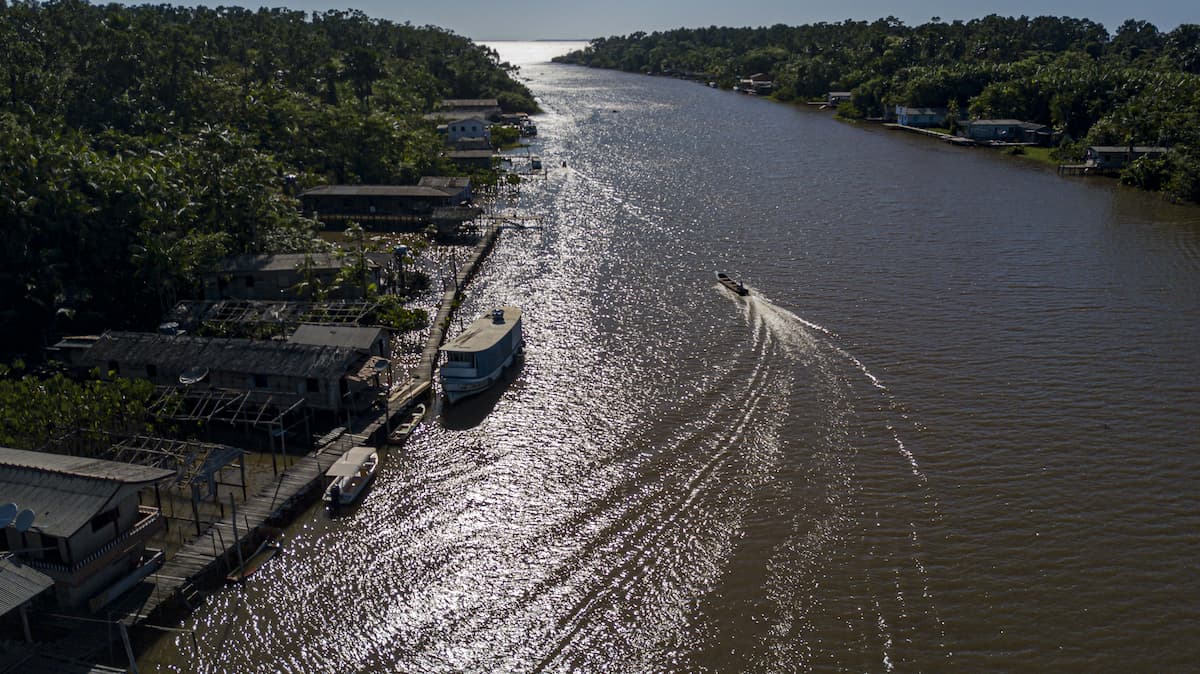
Presenting the research areas of the Emílio Goeldi Museum of Pará through an artistic lens. This is the goal of the exhibition "Quando o museu é rio" [When the museum is a river], open since June at the Tomie Ohtake Institute in São Paulo, in a partnership between the two institutions.
The showcase, which runs until August 16, is an adaptation of the project "Um rio não existe sozinho" [A river does not exist alone], on display between October and December of last year. It featured open-air installations at the Zoobotanical Park of the Goeldi Museum, stemming from reflections on the Museum's scientific production and the hosting of the 30th United Nations Climate Change Conference (COP 30) in Belém.
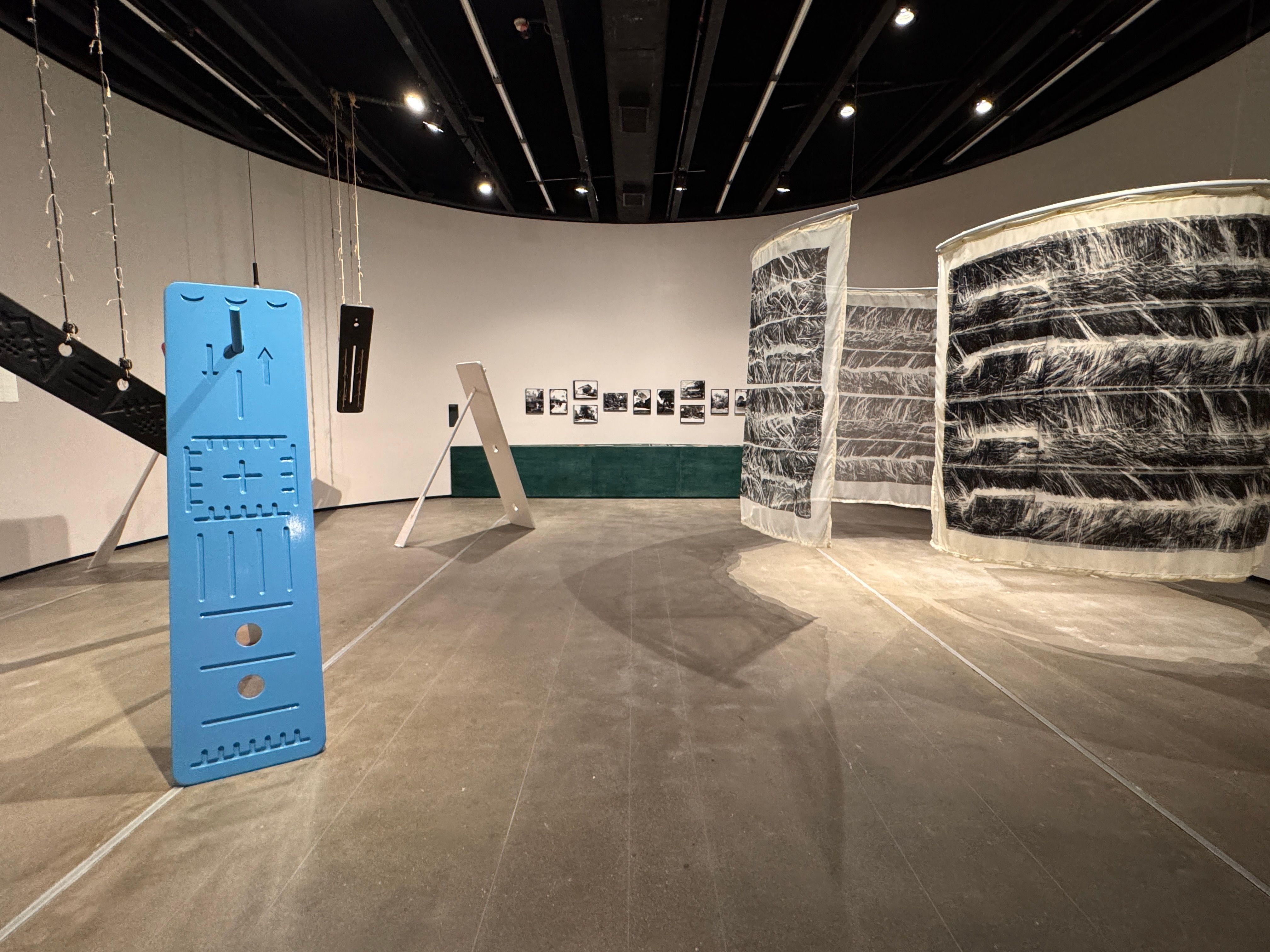
"Quando o museu é rio" brings together invited artists and scientific, archaeological, ethnographic, and biological collections from the Goeldi Museum. Among the participating artists are Déba Tacana, Elaine Arruda, Flume Studio, Francelino Mesquita, Gustavo Caboco, Mari Nagem, Noara Quintana, Paula Giordano, PV Dias, Rafael Segatto Barboza da Silva, and Sallisa Rosa.
PARTNERSHIP
The exhibition is curated by Sabrina Fontenele, Vânia Leal, and Ana Roman, from the Tomie Ohtake Institute, with scientific curation by Nelson Sanjad, Sue Costa, and Sâmia Batista, from the Goeldi Museum. According to Sâmia, designer and head of the Social Communication Service at Goeldi, the partnership with the Institute began back in 2022 with the exhibition "Ensaios para o Museu das Origens" [Essays for the Museum of Origins], a showcase held in São Paulo featuring the participation not only of Goeldi, but of several other museums across Brazil.
"Later on, the Tomie Ohtake Institute approached us to expand this dialogue with the Goeldi Museum, which is a science and natural history museum. Drawing from the context of COP 30 and climate change, the Institute invited artists to create artworks in dialogue with the scientific data that the Goeldi Museum delivers to society," Sâmia explains.
“A river does not exist alone"
The exhibition held at the Zoobotanical Park last year gathered eleven artworks by nine artists, installed outdoors within the park itself, allowing direct public interaction with the pieces. The showcase's intention was to transform contemporary art into a tool for discussing climate emergencies, fostering dialogue between human beings and the environment.

For the Tomie Ohtake Institute, staging the exhibition at the Goeldi Museum sought to bridge scientific and traditional knowledge, as well as artistic explorations. "There was no better place for us to think about this than this Parque Zoobotânico, with such special fauna and flora, but also because of the research the Museum has developed over these nearly 160 years, and the possibility of offering the findings and discussions from this research for artists to explore and envision possibilities for action," emphasized curator Sabrina Fontenele at the time.
Ana Roman reflects on the Institute's mindset on that occasion. "When Brazil was announced as the host of COP 30, we started looking into this and the responsibility of cultural institutions in this regard. We thought about creating a project that would address the confluence of knowledge during the COP, and we invited the Goeldi Museum to partner in this development. The artists were invited to propose works inspired by conversations with the scientists responsible for the Zoobotanical Park. The artists ended up learning a lot about this world. We all emerged transformed, the public loved it, and the exhibition was a success," the curator celebrates.
Knowledge presented playfully
According to Ana Roman, the Tomie Ohtake Institute wanted to continue the exhibition, this time in São Paulo. "So, we decided to invite these artists to rethink their works to be exhibited inside the Institute. And we invited the Goeldi Museum to join us and think about how it could be represented in this exhibition, evoking the plurality of voices that make up the institutional memories and the memories of these pieces that are part of the collection," she points out.
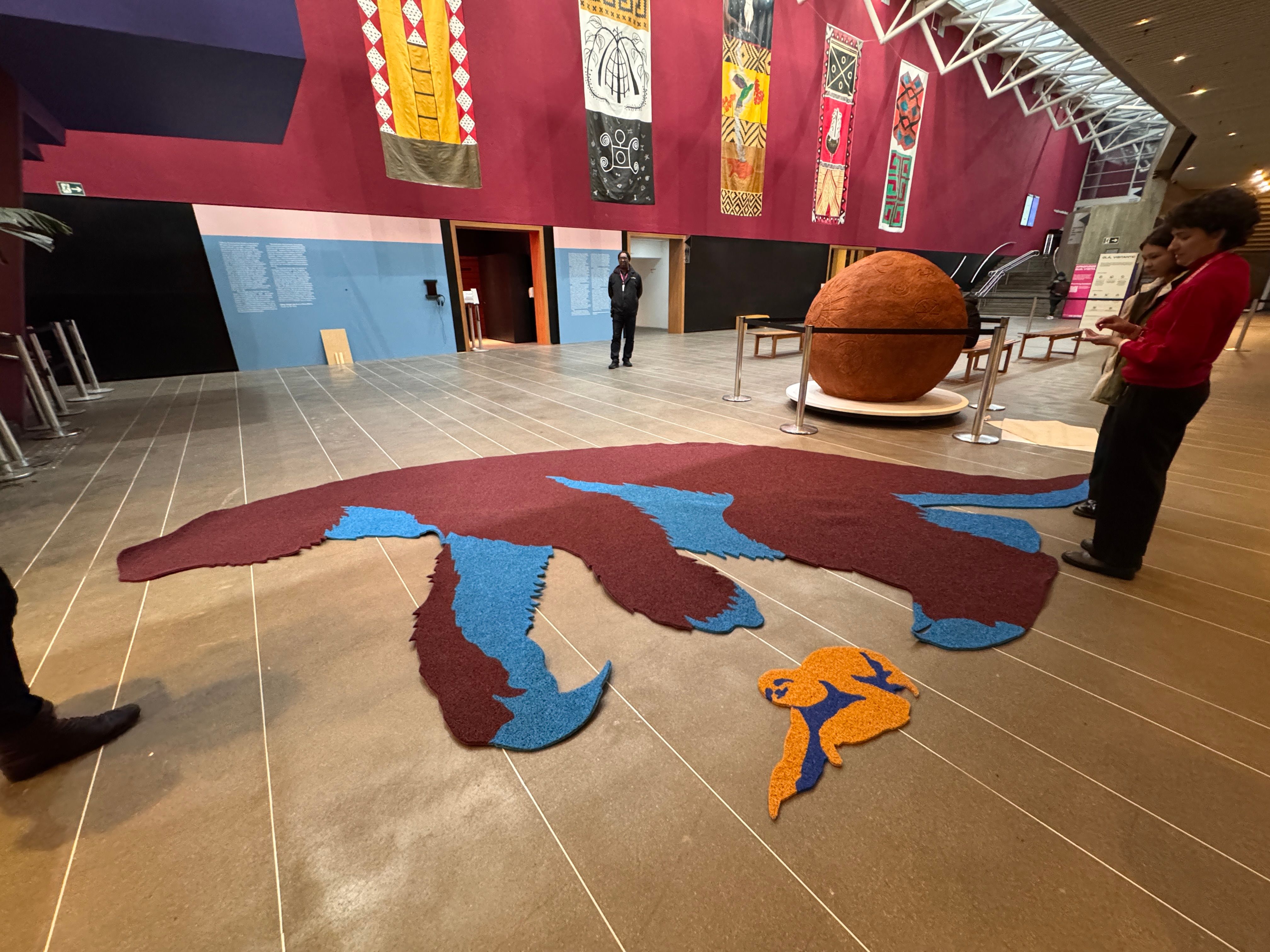
Sâmia Batista clarifies that in the current exhibition in São Paulo, the same artists developed new works in dialogue with the previous ones and with the Goeldi Museum's collection. "Visitors can get to know the Museum's research areas, presented through this artistic lens that seeks to raise society's awareness of the data the institution has been presenting for almost 160 years, whether in studies about the Amazon, the societies living in it, history, and, especially, the climate issue," the scientific curator emphasizes. This coming October, the Museum will celebrate 160 years of its foundation and scientific production.
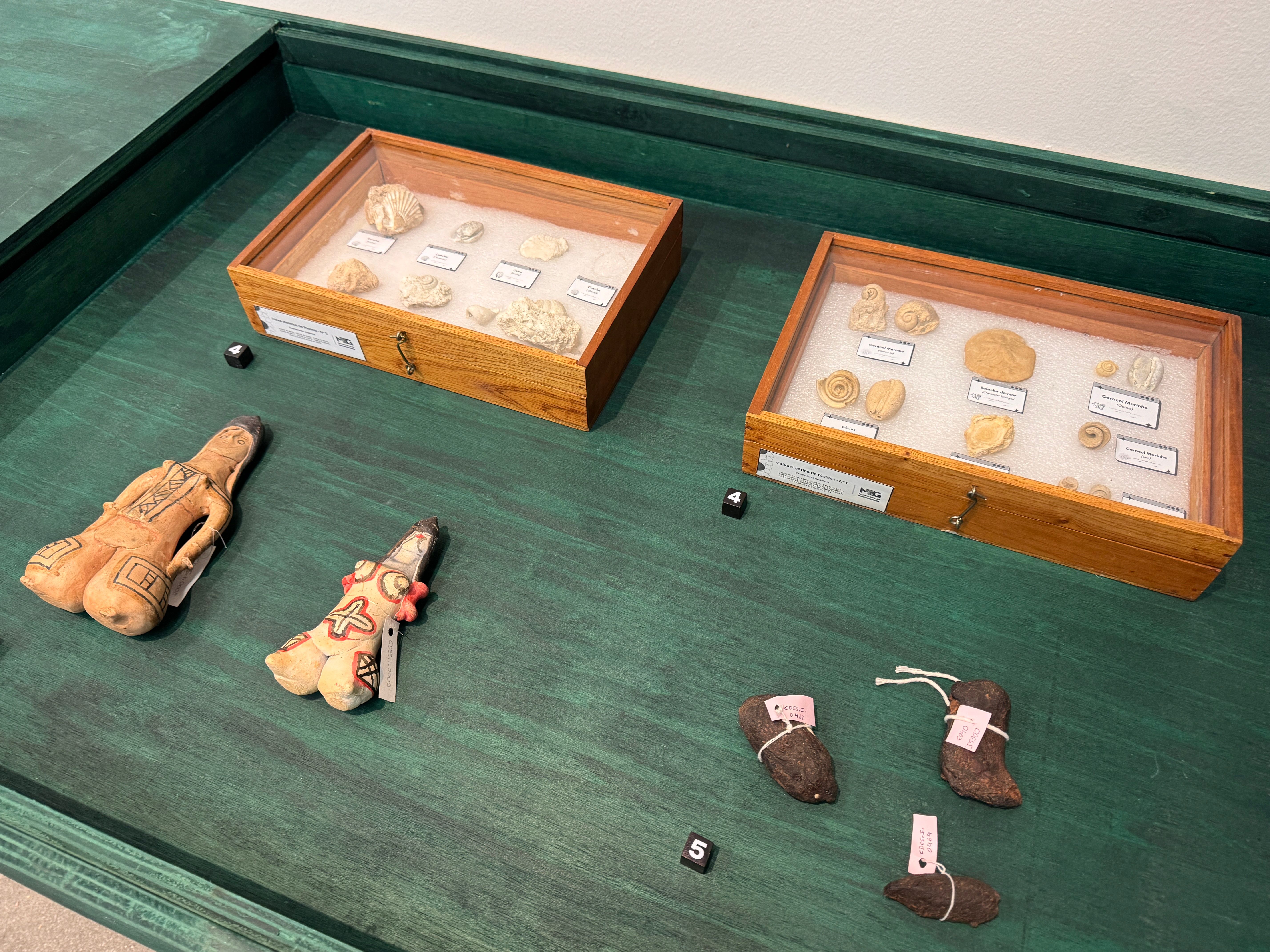
Sâmia exemplifies some of the works that can be seen in the exhibition "Quando o museu é rio". "The public can discover the internationally recognized archaeological research by Edithe Pereira in Monte Alegre. It is also possible to explore research associated with botany and all the areas the Goeldi Museum delves into, but through an awareness-raising experience," the designer notes.
Among other showcased sets are materials linked to the Emília Snethlage Didactic Collection, used in the museum's educational activities; the project "Replicando o Passado" [Replicating the Past], developed with ceramicists from Pará and Amapá; studies on the discovery of giant sloth fossils in the Amazon; in addition to the Goeldi Museum's historical work with Amazonian indigenous peoples and contemporary discussions surrounding the classification and reorganization of ethnographic and biological collections.
Artworks warn and raise awareness
Sâmia also mentions the work of Mari Nagem. "The artist delved into the Projeto Esecaflor [Esecaflor project], a research initiative of over 20 years by the Goeldi Museum that monitors climate change in a one-hectare sample of forest in the Caxiuanã National Forest. The vegetation in this sample was prevented from receiving water so that scientists could understand the forest's behavior under conditions of water scarcity," she details.
"The Goeldi Museum is, in a way, a pioneer in these climate studies in the region. For 20 years, it has already been discussing this issue of climate stress. So, Mari Nagem, upon learning about these studies, developed an artwork called Flora Futura [Future Flora], which aims to show what can happen if we face a situation of drastic water stress, which we are already experiencing," Sâmia points out.
CONNECTION
According to the designer, the idea of the artworks is to raise awareness about the environmental impacts exposed by scientists. "However, people need to create an affective connection, a subjective connection with the issue. The raw data is out there, presented in studies and by the press, but without the sensitizing power of poetics and aesthetics. We believe this ends up preventing society from acting in defense of the environment. We understand that the role of a science and natural history museum is also to communicate science, but in a sensitive and playful way, so that society becomes an agent of change and we can have another possible future," she concludes.
INSTITUTIONAL PARTNERSHIP
The production of Liberal Amazon is one of the initiatives of the Technical Cooperation Agreement between the Liberal Group and the Federal University of Pará. The articles involving research from UFPA are revised by professionals from the academy. The translation of the content is also provided by the agreement, through the research project ET-Multi: Translation Studies: multifaces and multisemiotics.