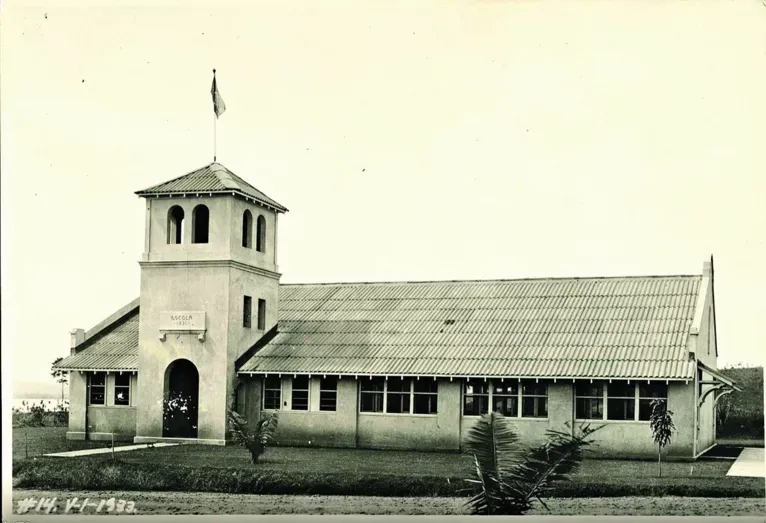
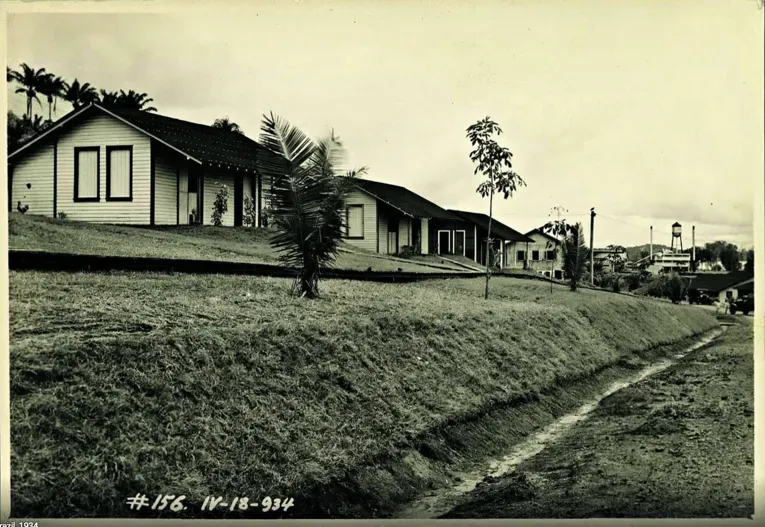
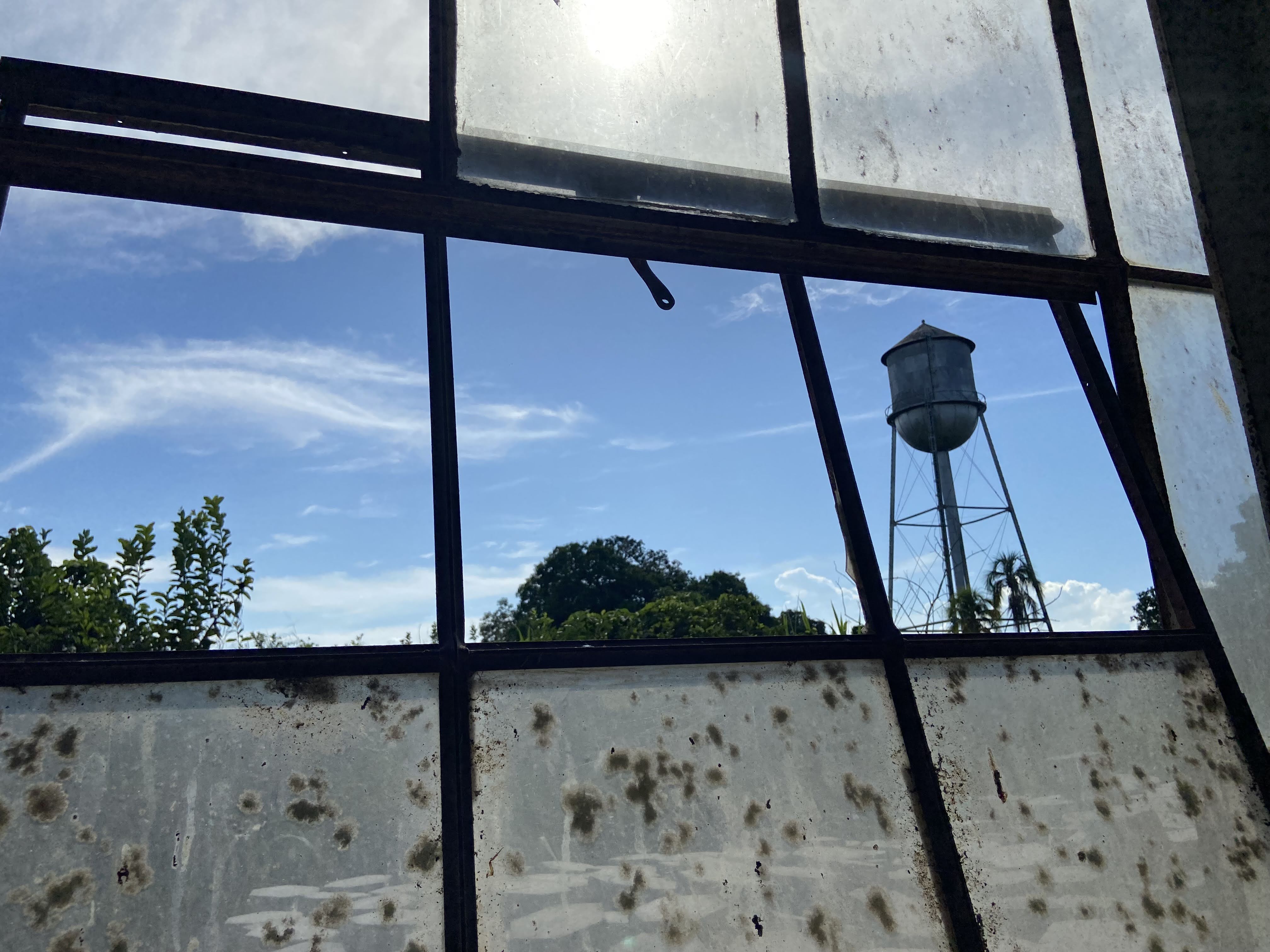
Deep in the Amazon rainforest, along the banks of the Tapajós River in western Pará, American-style wooden homes, an old hospital, a towering water tank and crumbling warehouses stand as reminders of an ambitious industrial project that ultimately failed.
Fordlândia, literally "Ford's Land", was founded nearly a century ago by industrialist Henry Ford as a purpose-built company town intended to supply the automotive industry with natural rubber from the Amazon rainforest.
Natural and cultural factors led to the project's failure, prompting the company and its foreign employees to abandon the town. Today, Fordlândia is a district of the municipality of Aveiro, with a population of around 1,750, and is working to preserve its heritage.
AMBITION
Between the 1870s and the 1910s, the Amazon experienced the height of the rubber boom, driven by natural rubber produced from the latex of the region's native Hevea brasiliensis, commonly known as the rubber tree. Demand for the product was global, as it became an essential raw material for the Industrial Revolution.
In 1876, however, English botanist Henry Wickham smuggled about 70,000 seeds of the species out of Brazil and into the British colonies in one of history's most emblematic cases of biopiracy. As a result, rubber tree plantations flourished in those colonies, creating competition that Amazonian rubber could not withstand. By 1928, Brazilian rubber's share of the global market had fallen from 95% to just 2.3%.
It was in that very year that Fordlândia was founded, as part of an ambitious project by automotive industrialist Henry Ford. Ford sought to secure his own source of natural rubber, then largely controlled by production in the British Empire's colonies. The material was essential for manufacturing tires and other automotive components.
Ford therefore decided to establish an industrial town in the Amazon to produce natural rubber from nearly two million rubber trees planted on land granted by the government of Pará. In addition to the rubber processing plant, the project included a community swimming pool, a cinema, a golf course, schools, power generators, a sawmill, workshops, a water tower, housing for American employees, electricity and piped water networks, and a state-of-the-art hospital, where Brazil's first skin graft was performed.
FAILURE
According to Túlio Chaves, who holds a Ph.D. in Amazonian Social History and is a professor at the Federal University of Pará (UFPA), the project failed for several reasons. "The first was the attempt to produce rubber on an industrial scale. In Malaysia, where the seeds were taken, there were no natural enemies, as there were in the Amazon. In Fordlândia, planting rubber trees too close together made them highly vulnerable to pest infestations," the historian explains.
According to Chaves, the rubber production process in Fordlândia was undermined by an environmental miscalculation. "There were countless attempts to control these pests between 1928 and 1936. The project was then moved to another site, in the town of Belterra, also in the state of Pará, where the terrain was flatter and the climate somewhat drier. Another planned town was established there until the early 1940s, when Ford ultimately decided to end natural rubber production in the Amazon. By then, synthetic rubber had also been developed. Much cheaper to produce, it ultimately brought an end to the dream of cultivating rubber tree plantations," the researcher adds.
IMPACT
In addition, Chaves notes that there were difficulties in implementing Ford’s proposed labor model in the Amazon. “The logic of an industrial town placed all aspects of a worker’s life under the control of the company. Their working hours, their time at home, their leisure, the prohibition of alcohol under Prohibition rules, and the attempt to regulate the lives of children, families, and even workers’ health made life very difficult for them, leading to numerous revolts. The most significant occurred in 1936, when workers destroyed much of the factory. This revealed the contradictions involved in implementing an economic process that was foreign to the labor logic that had previously existed within Amazonian culture and even Brazilian culture as a whole,” the Professor reflects.
Fordlândia after Ford era
The project was definitively abandoned in 1945, and in 1950 the land and infrastructure were purchased from the Ford Industrial Company of Brazil by the Brazilian government. The federal government took over the facilities, workers, and labor obligations, and has since been regarded as the legal owner of the area. The site was subsequently used for Ministry of Agriculture facilities and cattle ranching, and today also hosts mining projects.
Over more than seven decades, there have been no public initiatives to preserve what many consider a historical heritage site, which attracts visitors from all over the world, curious about Ford’s grand undertaking in the Amazon.
“Today, Fordlândia has sought to build memory and preservation into its own economic and social framework, recognizing it as an important component of its local economy. It is necessary to understand that economic crises and the absence of earlier public policies have indeed created major challenges for preservation efforts. Much of what was initially envisioned has already been altered by the historical dynamics of settlement in the district,” says Túlio Chaves.
PROCESS
In May this year , the Federal Court ruled, following a request by the Ministério Público Federal - MPF [Federal Public Prosecutor’s Office], that the federal government, the Instituto do Patrimônio Histórico e Artístico Nacional - Iphan [National Institute of Historic and Artistic Heritage], the state of Pará, and the municipality of Aveiro must undertake the recovery and preservation of Fordlândia’s urban, architectural, and landscape heritage. The case, which has been ongoing since 2015, has already received an appeal from Iphan.
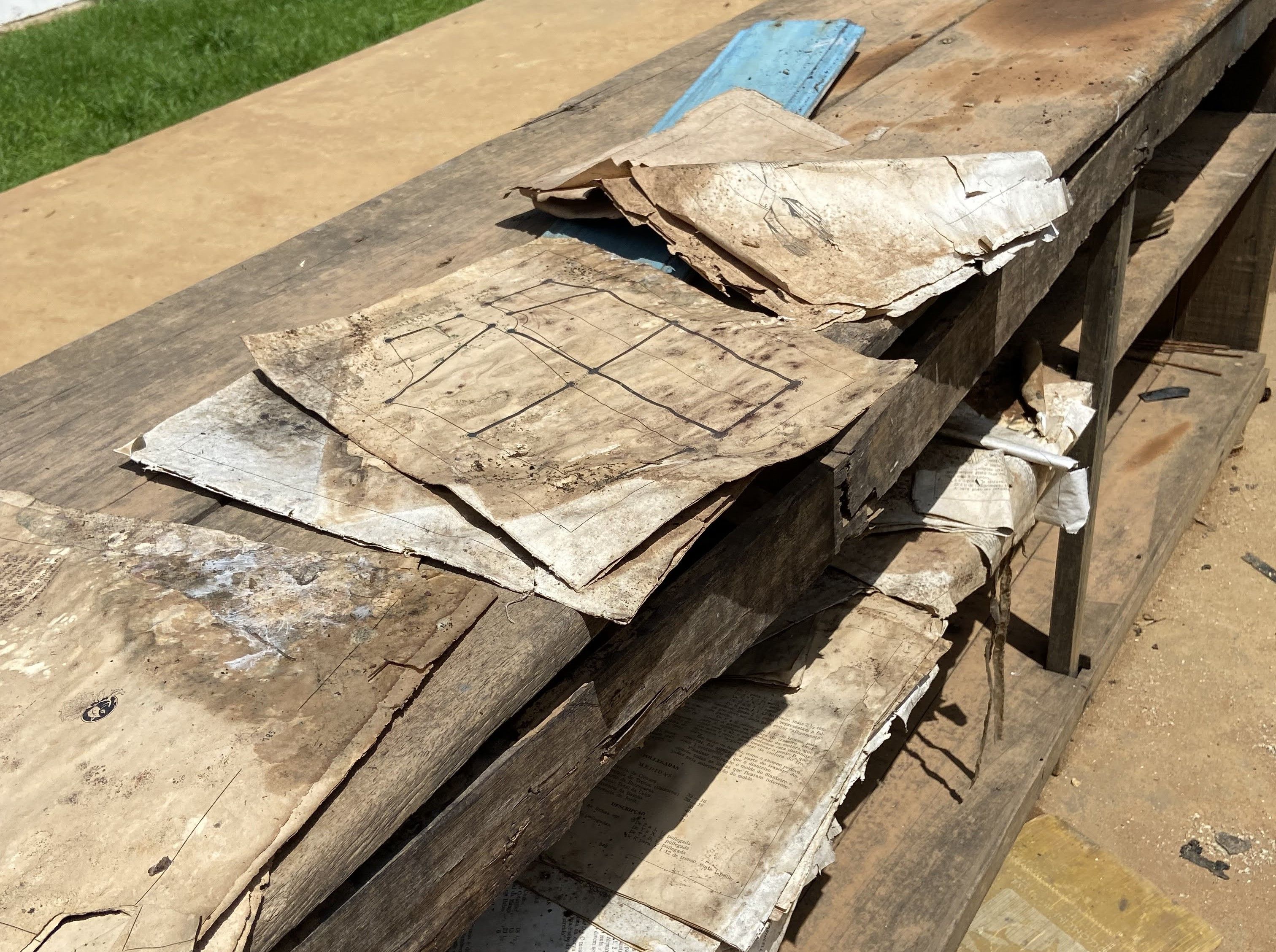
According to federal prosecutor Gilberto Batista Naves Filho from the MPF in Pará, the institution’s request for intervention by public authorities at the three levels of government is based on a historical failure by the state to act in the area. “This has led to a critical state of deterioration of a heritage site of undeniable historical, architectural, and cultural value for Brazil. The complex, a remnant of Henry Ford’s 20th-century industrial venture in the Amazon, is in an advanced state of abandonment. Judicial inspections have confirmed that emblematic buildings, such as the former Henry Ford Hospital, are in ruins. The cinema’s roof has collapsed, and historic houses have had their original features altered. In addition, the site has been subject to looting and vandalism, resulting in the loss of invaluable artifacts and documents,” Naves Filho states.

“The MPF’s action sought to break a decades-long cycle of neglect that threatened to erase a unique chapter of national history. Recently, the Federal Court upheld these arguments, ruling that, regardless of the completion of formal heritage listing, public authorities have a duty to restore and preserve assets of recognized cultural value,” the prosecutor says.
Originally, the MPF’s request sought to compel Iphan to complete the heritage listing process, which began in the 1990s. However, in May 2024, the institute’s Advisory Council rejected the listing of the Belterra and Fordlândia areas. The arguments were that, over time, the site had already lost its original characteristics and that preservation actions would be impossible, given the locality’s isolation and the condition of the structures. When contacted by the reporter, the agency said it does not comment on ongoing proceedings and reaffirmed its decision to close the listing process.
Residents seek heritage listing
Naves Filho emphasizes that the MPF’s action was driven by demands from Fordlândia’s own residents. “The opening of the civil inquiry that preceded the lawsuit was prompted by complaints submitted by district residents in February 2012, who reported by email the removal of roofs and the vandalism of historic buildings. In 2021, a public hearing was held in the locality, with strong community participation. A judicial inspection was also carried out at the residences, during which residents’ testimonies were heard and the condition of the properties was assessed,” he reports.
Historian Luiz Magno Ribeiro is one of these residents. Born in the district, he says his professional choice is closely linked to the history of the industrial town. “I spent my childhood listening to speeches about Fordlândia,” he recalls.
Ribeiro is a strong advocate for the site’s heritage listing and preservation. “It has been a 34-year process that was ultimately denied by Iphan. There are machines, tools, warehouses, tunnels, houses, and the living memory of those who experienced those times. The municipality of Aveiro does not have the resources to revitalize or maintain what remains. Therefore, funding from state and federal levels would be necessary for us to continue telling what it was, how it stands today, and how we want our children to speak about Fordlândia in the future,” he argues.
According to Ribeiro, many people have already died while waiting for the site’s revitalization. “Some are already in their 80s, and if you ask them, the answer will always be the same: ‘One day Fordlândia will receive attention, and we will be able to enjoy 50% of what it once was,’” he says.
INSTITUTIONAL PARTNERSHIP
The production of Liberal Amazon is one of the initiatives of the Technical Cooperation Agreement between the Liberal Group and the Federal University of Pará. The articles involving research from UFPA are revised by professionals from the academy. The translation of the content is also provided by the agreement, through the research project ET-Multi: Translation Studies: multifaces and multisemiotics.