
Some people think of the Amazon as a single entity: one vast forest. However, in fact, there is not just one Amazon, but multiple Amazons, in the plural form, with diverse environments, populations, occupations, cultures, land use, and even biomes. After all, Brazil’s Legal Amazon includes not only the Amazon biome itself, but also areas of Cerrado and Pantanal.
For experts in the subject, facing challenges and promoting regional development require necessarily recognizing the Amazon’s diverse realities and demands.
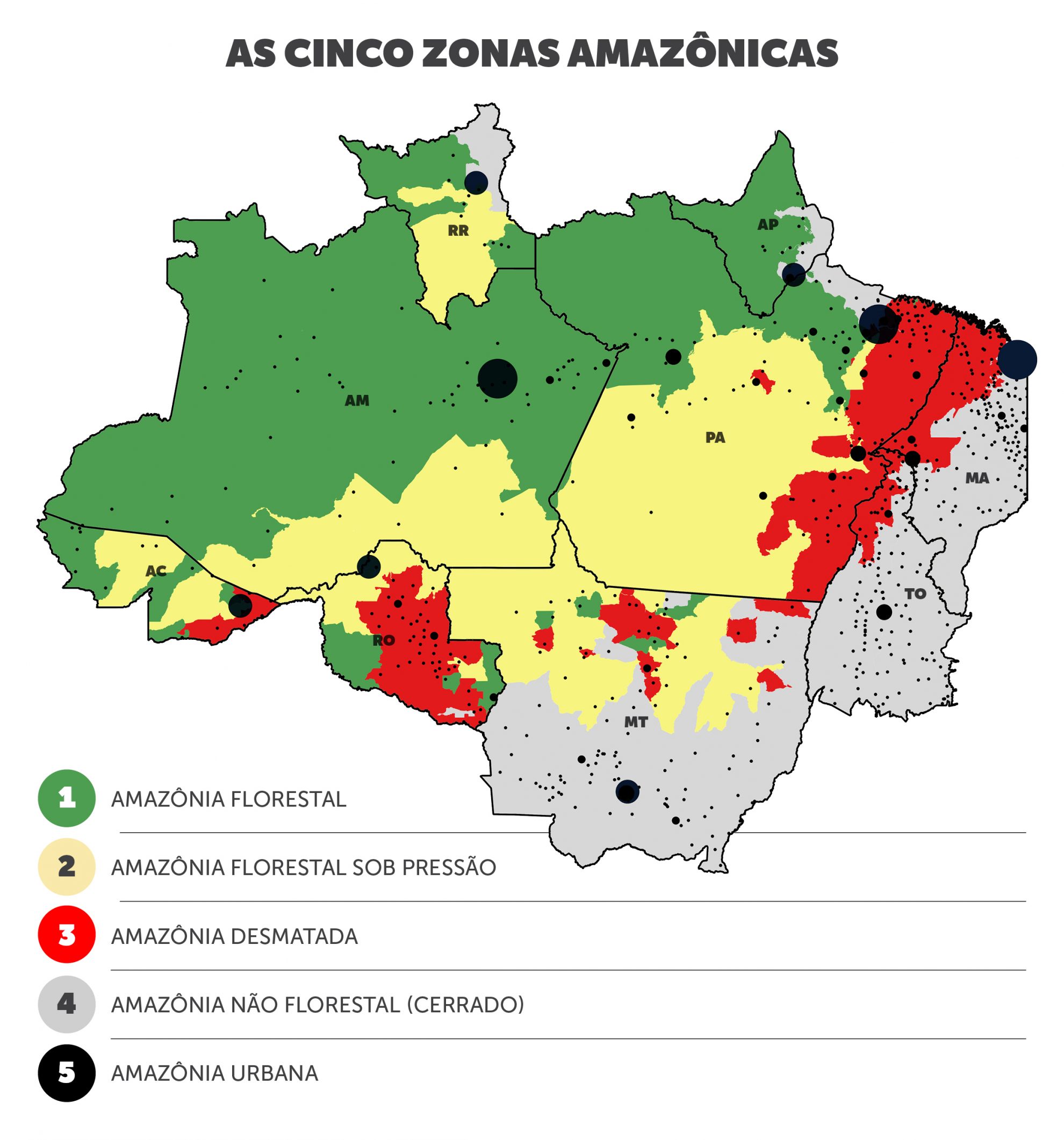
For this reason, a team of Brazilian researchers, in a joint initiative called The Amazônia 2030 Project, proposed the existence of five distinct Amazons. The study, titled “The Five Amazons: Foundations for the sustainable development of the Legal Amazon”, groups the Legal Amazon into five macrozones based on remaining vegetation cover and proposes specific solutions for each.
REALITIES
According to the researchers’ proposal, the five Amazons are classified based on land-use dynamics: Forested, Forest Under Pressure, Deforested, Non-Forested (comprising Cerrado areas), and Urban. Each of them requires different types of intervention.
According to Juliano Assunção, an Economics professor at the Pontifical Catholic University of Rio de Janeiro (PUC-Rio), a researcher of Amazônia 2030 Project and one of the study’s authors, the central idea is to show that the Amazon is vast and heterogeneous, and that designing public policies for the region demands taking these complexities into account.
“You have situations in cities that are very different from those in areas under deforestation pressure or areas where the forest remains more intact. Not only are the economic and social dynamics of these areas very different, but public policy design must also be attentive to these differences. Historically, the Amazon has suffered from initiatives designed outside the region and applied to it without considering its specificities and regional diversity”, the researcher explains.
The authors sought to present the concept of the five Amazons so that each zone can develop according to its natural vocation. “There is a whole spectrum of activities, with different configurations for each of the Amazons. The general idea is that the Amazon is not uniform but complex, not only from the perspective of the forests themselves, but especially in its socioeconomic dynamics”, the professor adds.

Forests account for 39% of the Legal Amazon
According to the study, forest areas make up 39% of the Legal Amazon and call forth conservation efforts combined with social and economic gains. This includes supporting the bioeconomy and payments for environmental services - a financial mechanism that compensates rural producers and traditional communities for conserving, restoring, or sustainably managing forests. The document suggests increasing exports of forest-compatible products such as açaí, Brazil nuts, and cocoa.
Another recommendation is not only to ensure the preservation of already protected forests (such as conservation units), but also to create new protected areas in undesignated forests, or in other words, those under state or federal control that have not yet been assigned a land-use category. These areas total about 580,000 square kilometers, roughly the size of the state of Minas Gerais, and are located mainly in Amazonas.
UNDER PRESSURE
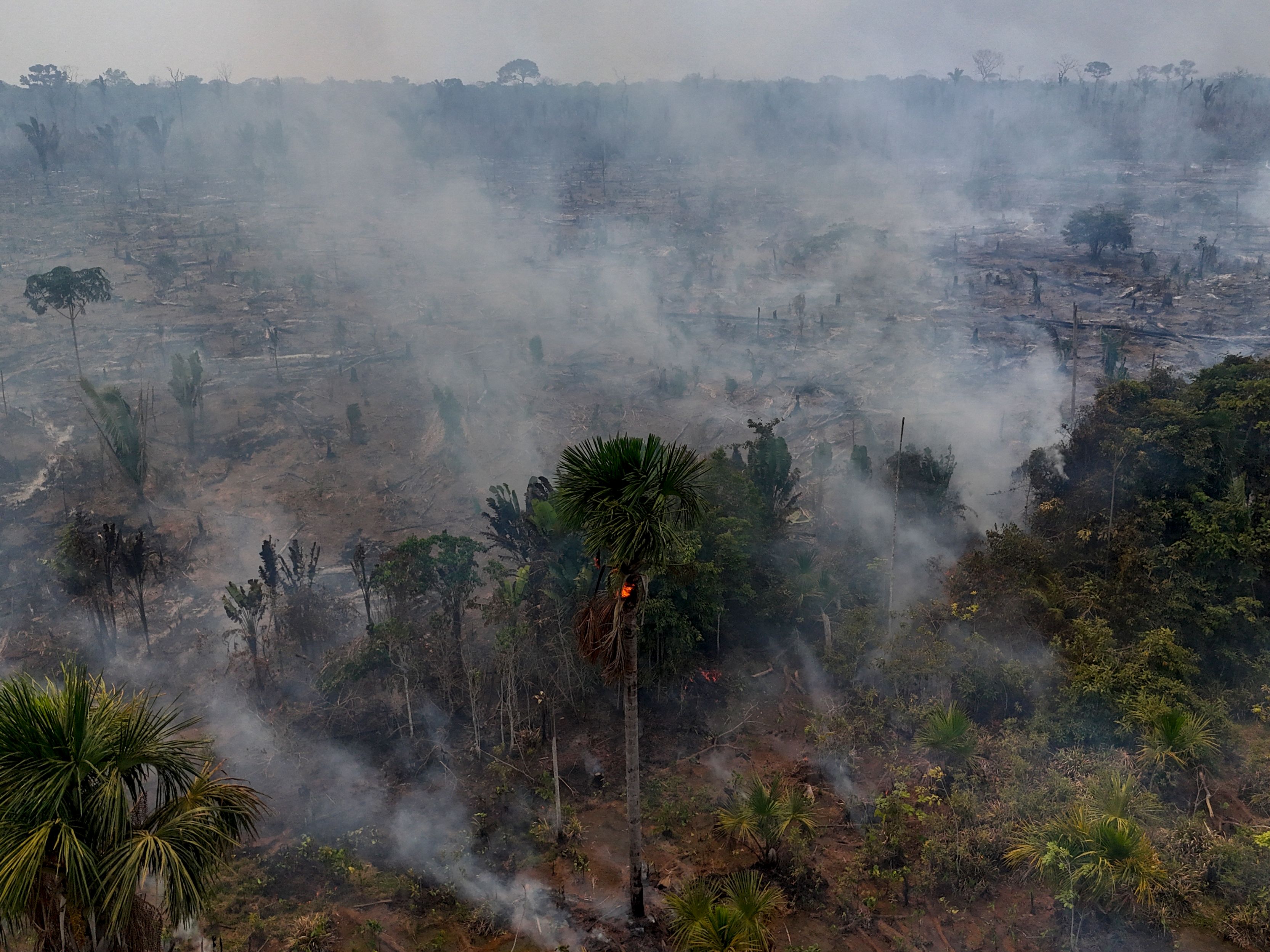
Areas classified as Forest Under Pressure account for 29% of the Legal Amazon. These regions still have extensive vegetation cover but face increasing deforestation, illegal logging, mining, and land grabbing.
For this zone, the recommended agenda includes strict enforcement and monitoring to curb environmental crimes, the creation of protected areas in undesignated forests, sustainable forest management, technical assistance and credit for small producers to make better use of already deforested areas.
According to Juliano Assunção, land regularization in these areas could worsen land grabbing. “Since these are largely undesignated public lands, issuing land titles can make property rights more uncertain and more conducive to land grabbing, increasing the likelihood of public lands being appropriated illegally. A policy that might increase productivity and well-being in deforested areas would be disastrous in forest areas under pressure, from the perspective of crime and its consequences for deforestation”, the specialist affirms.
Deforested areas
In the 11% of territory classified as Deforested Amazon, the first step is land regularization, promoting improved agricultural production without further deforestation. According to the study, 70% of deforested land consists of low-productivity or abandoned agricultural areas.
“These areas were occupied and deforested long ago. Land tenure issues here hinder productivity more than they threaten the forest. It is a region where land regularization is more promising and currently operates below its productive potential. Bringing land regularization, infrastructure, and rural credit will increase productivity without harming the forest”, Assunção highlights. There is also potential for forest restoration and reforestation, with opportunities for economic gains through the carbon capture market.
NON-FORESTED
The Non-Forested Amazon corresponds to 21% of the territory, mainly covered by Cerrado vegetation, such as in Mato Grosso, Tocantins, and Roraima, as well as campinarana ecosystems in northern Amazonas and on Marajó Island. For this region, recommendations are similar to those for deforested areas, including incentives for forest restoration, reforestation, agroforestry systems, and low-carbon agriculture. “It is a region where agricultural dynamics are much more active”, Assunção highlights.
Urban Amazon concentrates 76% of inhabitants
The final category is the Urban Amazon, which concentrates 76% of the region’s population but faces major infrastructure challenges, including deficits in sanitation, waste collection, and other public services. Despite these conditions, most jobs are located in cities. “According to PNAD [the National Household Sample Survey by IBGE], 83% of jobs in the Amazon are outside agricultural activities. They are urban activities, especially sales activities. This illustrates how the region’s economic engine often differs from the public debate. If we fail to recognize these issues, public policy will overlook the specific needs of different regions”, the researcher warns.
It is necessary to prioritize investments
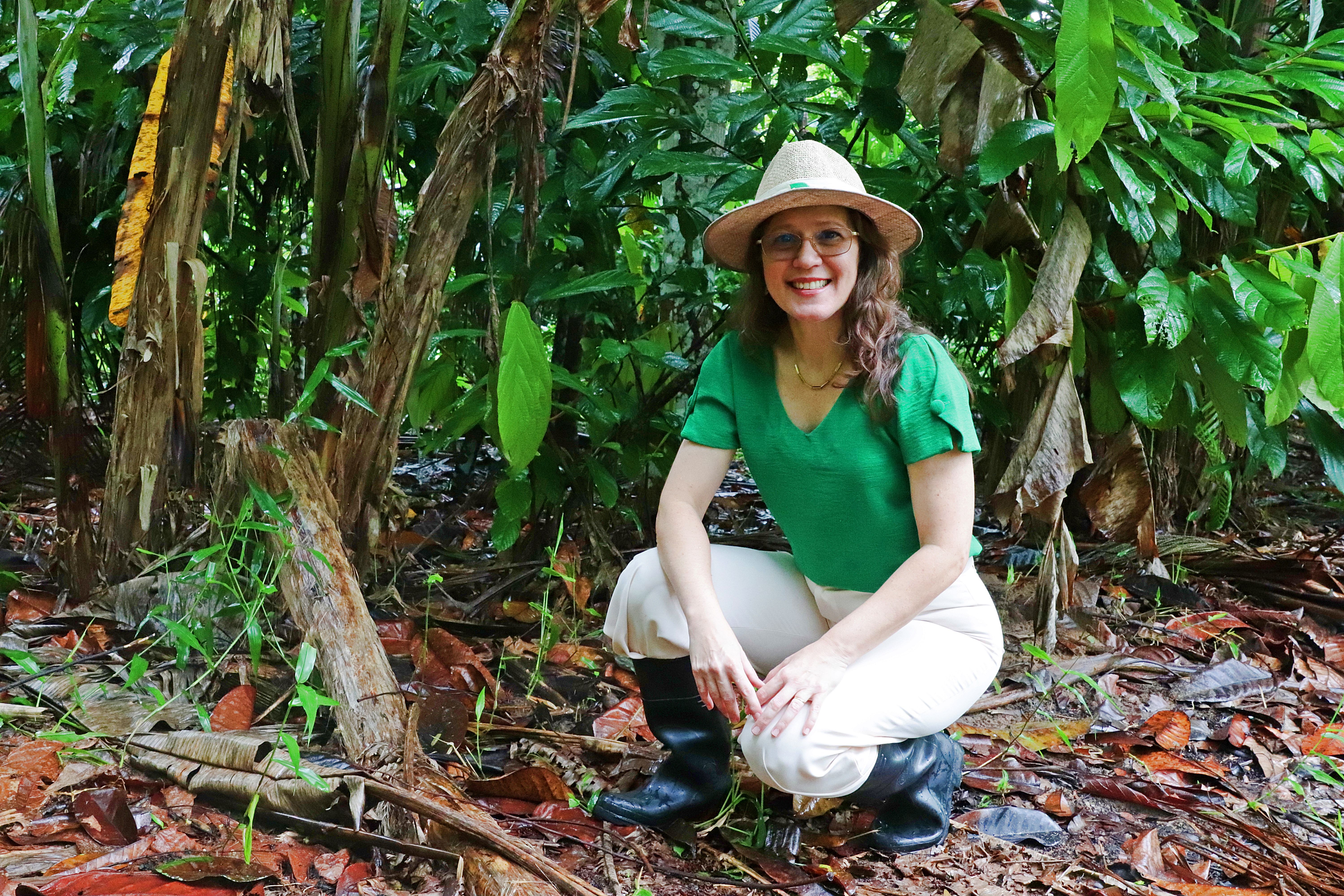
According to forest engineer Débora Aragão, from Embrapa Amazônia Oriental, investments in agroforestry systems and forest restoration should be prioritized. “These two practices can reconcile agricultural production with environmental conservation. They transform degraded areas into productive and biodiverse systems by combining trees with crops. Forest restoration is also a key strategy for improving ecological functions, restoring biodiversity, improving soil quality, increasing carbon storage, and mitigating climate change. This approach challenges the idea that forests must be deforested to generate income”, she emphasizes.
PUBLIC SECTOR
According to Juliano Assunção, the study on the five Amazons has been presented to government authorities. “This is a defining feature of the project. We maintain close dialogue with local state governments. The government of Pará, for example, is an important partner, as others are”, he says.
“I believe some of these ideas, especially the concept of Amazonian heterogeneity, are reaching decision-makers. We are already seeing public officials acknowledge that land regularization programs or high-performance agriculture policies will have different impacts in different regions. This understanding is being absorbed by the public sector, although it remains an ongoing effort. Still, the approach has been well received because the Amazônia 2030 project contributes to improving the region’s socioeconomic and environmental development, and those working on the ground can see the results”, the researcher affirms.
INSTITUTIONAL PARTNERSHIP
The production of Liberal Amazon is one of the initiatives of the Technical Cooperation Agreement between the Liberal Group and the Federal University of Pará. The articles involving research from UFPA are revised by professionals from the academy. The translation of the content is also provided by the agreement, through the research project ET-Multi: Translation Studies: multifaces and multisemiotics.


