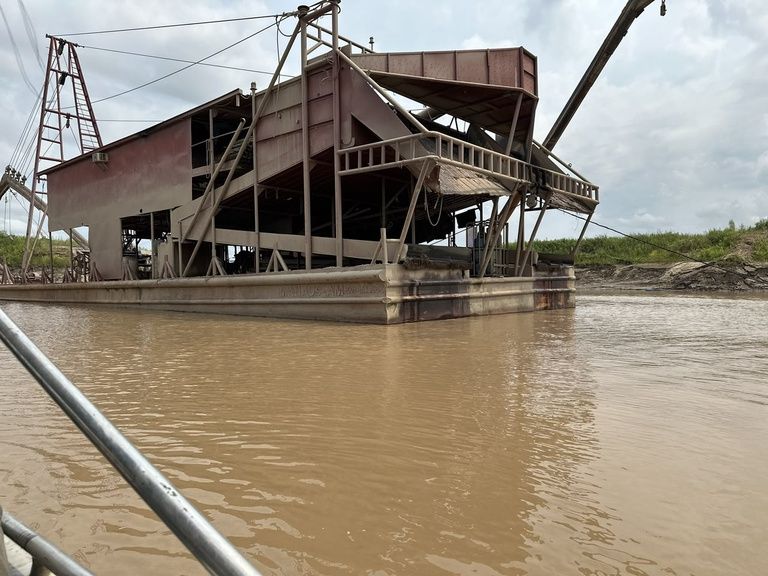
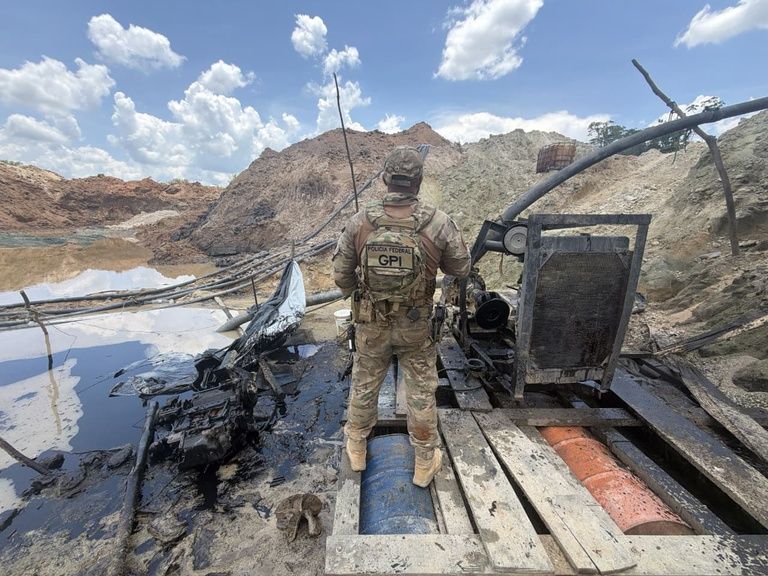
On the Puruê River, in the Japurá region of Amazonas state, efforts to combat illegal mining have also targeted the infrastructure that sustains the activity. Between November 4 and 8, a joint operation by federal agencies identified a logistical support site used to store and distribute fuel, food supplies and other materials to mining sites.
One of the camps discovered had approximately 20 makeshift shelters.
During the operation, seven dredges, five cargo barges and approximately 12,500 litres of fuel were seized or rendered unusable.
The operation is another chapter in a situation that has gained visibility in recent weeks, as images of armed officers, explosions, destroyed machinery and operations in remote areas of the Amazon have circulated on social media.
Behind these images lies a complex network. Illegal mining involves more than the worker operating a dredge or excavator. It encompasses investors, gold buyers, trading routes, deforestation, mercury contamination, conflicts in Indigenous Territories and, in some cases, links to organised crime.
The distinction matters. Small-scale mining is not inherently illegal. It can be carried out with environmental authorisation and a mineral extraction permit. The problem is extraction without a licence, without oversight and without responsibility for restoring degraded areas.
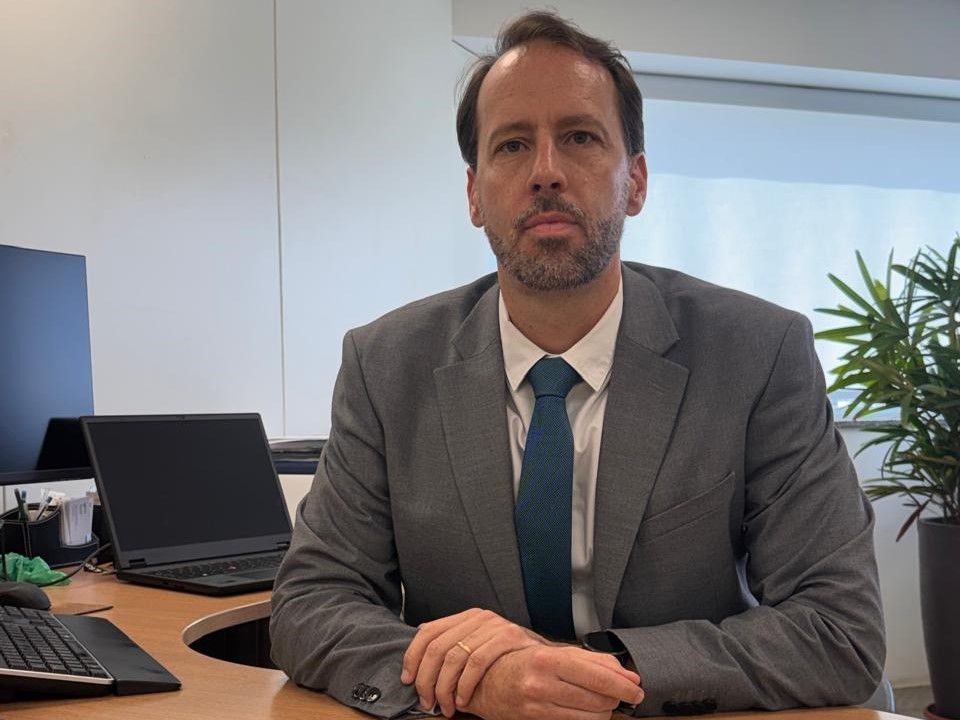
“Mining is not illegal in itself. Small-scale mining can be lawful, including the extraction of gold, sand, clay, crushed stone and gravelly soil. What determines whether it is lawful is authorisation from the environmental authority and the National Mining Agency (ANM),” explains Federal Police officer Renato Madsen Arruda, general coordinator for the Protection of the Amazon, the Environment, and Historical and Cultural Heritage.
According to him, legal extraction must comply with sustainability rules and provide for the remediation of damage. Illegal mining, in addition to harming the environment, constitutes a crime against federal property, since mineral resources belong to the Brazilian state.
What remains after illegal extraction
The impact of illegal mining goes far beyond the loss of gold. Dredges and excavators alter riverbeds, destroy riverbanks, change water flows and leave behind mountains of waste. Mercury, used to separate gold from other materials, contaminates water, soil and fish, which, together with cassava and açaí, form the basis of the diet of Amazonian families.
“Mercury ends up contaminating not only the water but also the soil. The community that eats those fish, drinks that water and grows crops on that land will be the first to suffer,” says Arruda.
The warning is particularly serious in the Javari Valley, in western Amazonas, home to one of Brazil’s largest Indigenous Territories. According to Orlando Possuelo, coordinator of the Surveillance Team of the Union of Indigenous Peoples of the Javari Valley (Univaja), mining barges were identified near the territory as far back as 2002, during an expedition by the National Foundation for Indigenous Peoples (Funai).
In 2023, an aerial survey identified new mining sites advancing into the region. “Mining directly affects the lives of peoples living throughout the waterways of the Javari Valley, mainly because of mercury contamination,” says Possuelo.
The problem also affects community economies. Mining encourages the recruitment of Indigenous people to work in the activity and increases pressure on a territory already marked by isolation, difficulties of access and the presence of criminal groups.
In 2024, during the Free Land Camp (ATL), the Special Secretariat for Indigenous Health (Sesai), with support from the Oswaldo Cruz Foundation (Fiocruz), conducted mercury tests on members of the Javari Valley delegation. According to Possuelo, more than 90% of participants had mercury levels above those considered safe.
The government’s response
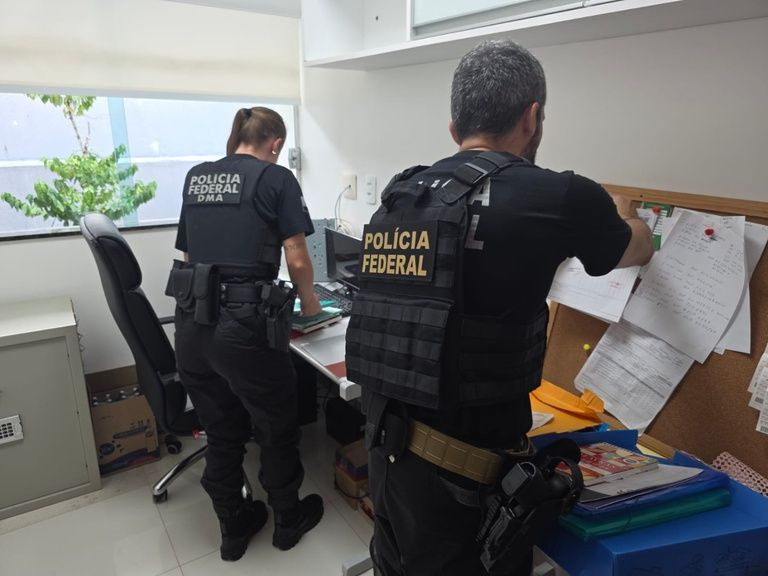
The Federal Police do not carry out environmental inspections. That responsibility lies with the Brazilian Institute of Environment and Renewable Natural Resources (Ibama), the Chico Mendes Institute for Biodiversity Conservation (ICMBio), state and municipal environmental departments and the ANM. The Federal Police’s role is to investigate.
During operations, the Federal Police work alongside environmental inspection and public security agencies. Funai helps provide an understanding of the situation facing Indigenous communities. Ibama assesses environmental damage. The Federal Police seek evidence identifying those who finance and organise the schemes.
“The person mining there is often just an employee. They do not own the operation, the dredges, the barge or the machinery. If that person leaves, the owner sends someone else. So when we go into the field, we seek evidence of who is making money from the scheme as a whole,” Arruda explains.
This is where the investigation goes beyond destroying equipment. The Federal Police try to trace the money financing the dredges, barges and excavators. “Our focus is not just destruction but stripping these operations of their financial resources. We try to determine how much the criminal group profited or the value of the environmental damage it caused and, on that basis, seize the group’s assets,” says the officer.
Rendering equipment unusable, frequently shown in images circulating online, is provided for by law. It may be done when removing machinery would endanger officers, communities or the people under investigation. The measure may also be adopted when there is no other safe way to stop the activity.
The logic of quick profits
For Professor Armin Mathis, director-general of the Centre for Advanced Amazonian Studies (Naea) at the Federal University of Pará (UFPA), enforcement operations are necessary but can have an unintended effect when they are not accompanied by a broader strategy.
Knowing that their equipment may be destroyed, some miners seek to extract as much as possible in a short time, using old, more polluting machinery. The logic is simple: recover the investment before a possible enforcement operation.
“A miner who knows they may be targeted by an intervention works with old equipment, which is extremely polluting, and knows they have two or three months to extract enough to avoid a loss. That means there is no concern whatsoever for restoring the area,” Mathis says.
For him, more effective enforcement means targeting the structures that sustain mining: financing, the purchase and sale of gold, money laundering and the networks connecting the Amazon to domestic and international markets. “We need to move beyond isolated operations and tackle the structures that make mining possible. That is much more complicated because it requires knowledge of gold-related money-laundering processes and economic crimes,” he argues.
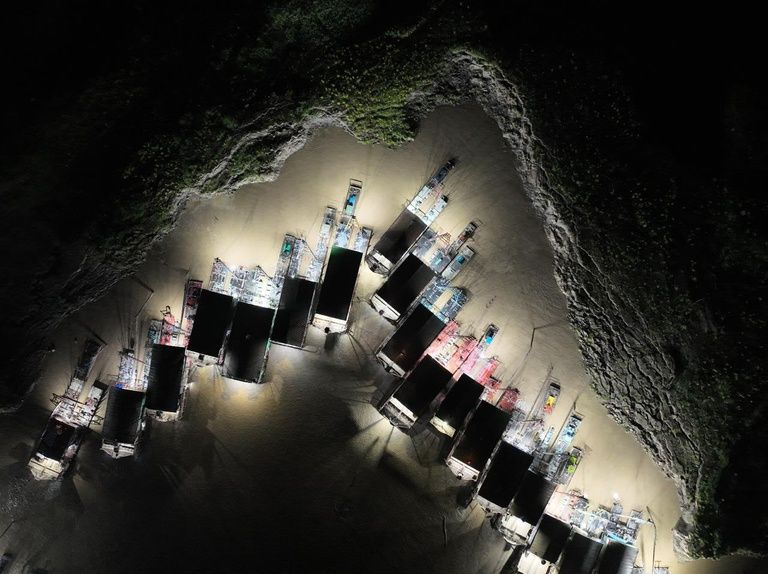
Mathis recalls that mining is part of the Amazon’s economic history. Modern mining intensified from the late 1950s on the Tapajós River and expanded in subsequent decades as international gold prices rose and extraction became mechanised.
With barges, excavators and heavy equipment, it became possible to process much larger volumes of material. Production increased. So did the damage.
Gold and organised crime
The relationship between illegal mining and organised crime is one of the authorities’ main concerns. The Federal Police acknowledge that criminal factions may seek out profitable activities but say there is still no evidence that they have taken control of mining operations in the Amazon. “We are concerned that these factions may move into mining and develop an interest in it, but it is not yet the case that they have taken over mining operations. They are often linked to other crimes, such as drug trafficking,” says Arruda.
Gold can be used as a money-laundering instrument. Proceeds from illegal activities can be invested in mining, converted into gold and then exported or introduced into the formal market through fraudulent purchases and declarations.
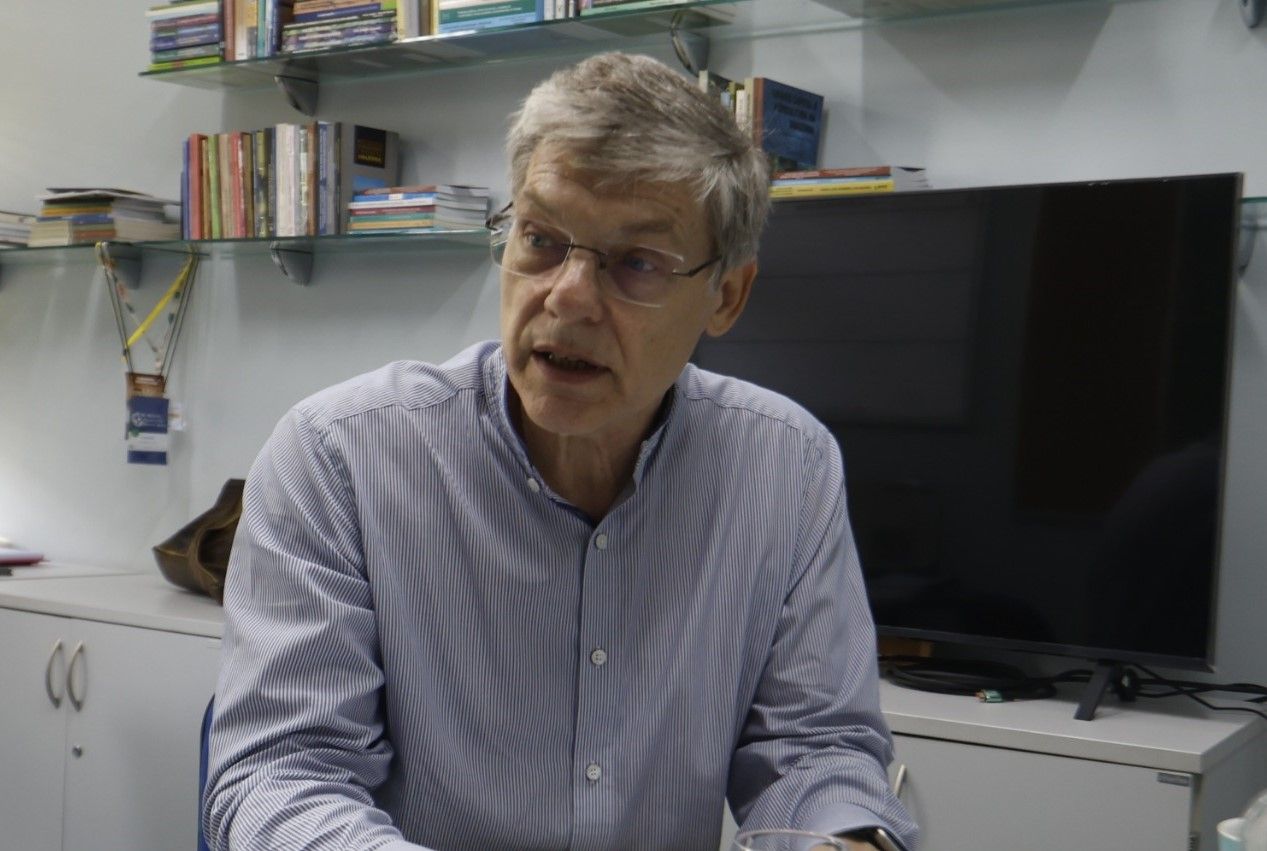
Mathis notes that the border areas between Pará, Amazonas, Rondônia and parts of neighbouring countries create favourable conditions for the movement of illicit funds. In some regions, there are signs of growing links between drug trafficking and mining-related structures, particularly because gold can be used to move money.
“A drug trafficker needs to process a large amount of cash. One possibility is to invest in mining, keep the gold and export it. That is one form of money laundering,” the professor explains.
What communities expect
In the Javari Valley, Univaja says it supports government initiatives to combat illegal activities in Indigenous Territories but calls for sustained action rather than isolated operations. “People expect not only occasional operations but effective, lasting strategies that put an end to these illegal activities in the territory,” says Possuelo.
Those expectations include continuous monitoring, a regular government presence, investigations into financiers and protection for communities. For Indigenous leaders, removing one dredge does not solve the problem if it resumes operating elsewhere.
“Once the damage is done, that dredge or piece of equipment moves somewhere else and causes damage there too. And the community has to live with the damage left behind. Nature will take years, decades, sometimes 100 or 200 years to recover,” warns Arruda.
INSTITUTIONAL PARTNERSHIP
The production of Liberal Amazon is one of the initiatives of the Technical Cooperation Agreement between the Liberal Group and the Federal University of Pará. The articles involving research from UFPA are revised by professionals from the academy. The translation of the content is also provided by the agreement, through the research project ET-Multi: Translation Studies: multifaces and multisemiotics.