
“This month, I went to clean my mother's water tank and I came across these mussels inside. It's water drawn from the river. And our whole family has been experiencing stomach aches and diarrhea. We think it has to do with these mussels.” The account is from Vera Lúcia Lobato, a resident of the riverside community of Nossa Senhora do Livramento, in Abaetetuba, Pará.
The testimony refers to a problem that has affected the Tocantins basin and threatens to spread throughout the Amazon River: the proliferation of the golden mussel, an invasive species native to Southeast Asia. The mollusk arrived in Brazil in the 1990s, originating from Argentina. The suspicion is that it came in the ballast water of some ship coming from Asia and that this water was improperly discharged into the region, bringing with it aquatic fauna from another part of the world.
The arrival of the golden mussel in the Tocantins River was already expected, brought by currents and vessels. The issue is that it arrived much earlier than predicted: it should only occur in 2030, but it had already been detected in 2023. This is what a study carried out by the National Center for Research and Conservation of Marine Biodiversity of the North (Cepnor), of the Chico Mendes Institute for Biodiversity Conservation (ICMBio), in partnership with the Ecotoxicology Laboratory of the Federal University of Pará and the Evandro Chagas Institute, and led by fisheries engineer Rafael Chagas, indicates.
But why is the presence of this mollusk a problem?
EXOTIC VS. INVASIVE SPECIES
According to Lana Magalhães, a biologist with a PhD in Biodiversity and Biotechnology from the State University of Amazonas (UEA), exotic species are all those that occur in areas where they are not native. “They can be introduced accidentally or intentionally, the latter usually for economic or cultural reasons. In the colonization of Brazil, for example, the country received many species from other environments so that it would resemble the natural environment of the colonizers. The accidental form can be through ballast water from ships, escape of fish from cultivation areas, or works of high environmental impact,” explains the researcher.
The biologist differentiates between exotic and invasive species. “Exotic species become invasive when they become as abundant as, or even more abundant than, native species. There are three factors that determine this. The first is that some species are characterized by a high growth capacity; they are generalists and use resources more efficiently; or they produce many seeds. The second is the susceptibility of the environment: the more altered it is, the greater the possibility of invasion. And the third is the number of individuals introduced. So, not every exotic species is invasive, but every invasive species is exotic,” adds the specialist.
Researcher measures the species' reach
The problem with invasive species is the socio-environmental impact they cause. Because they have no natural predators and disperse easily, they end up competing for resources with native species and interfering with the local ecosystem. In addition, they can cause economic and even health problems for the human population.
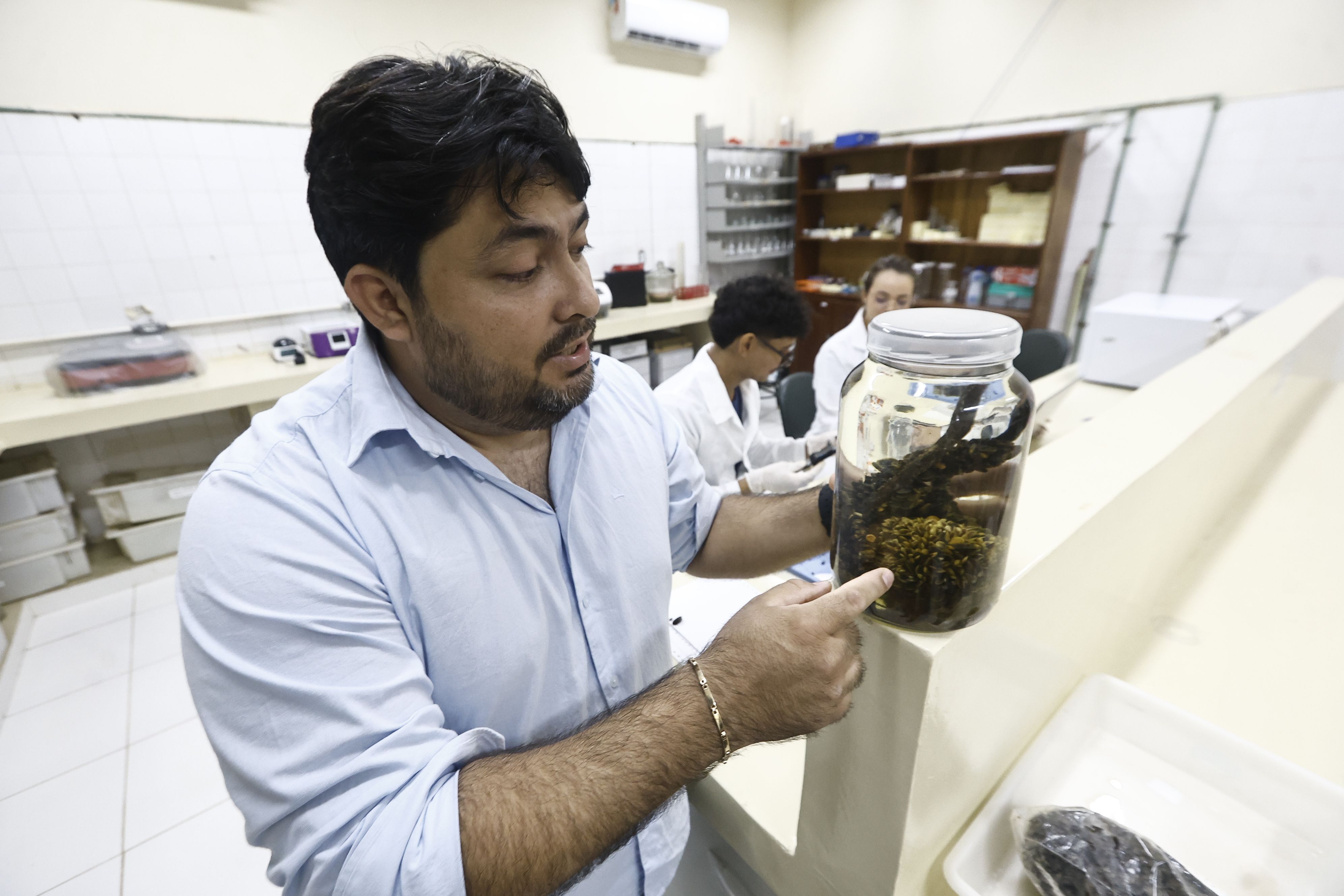
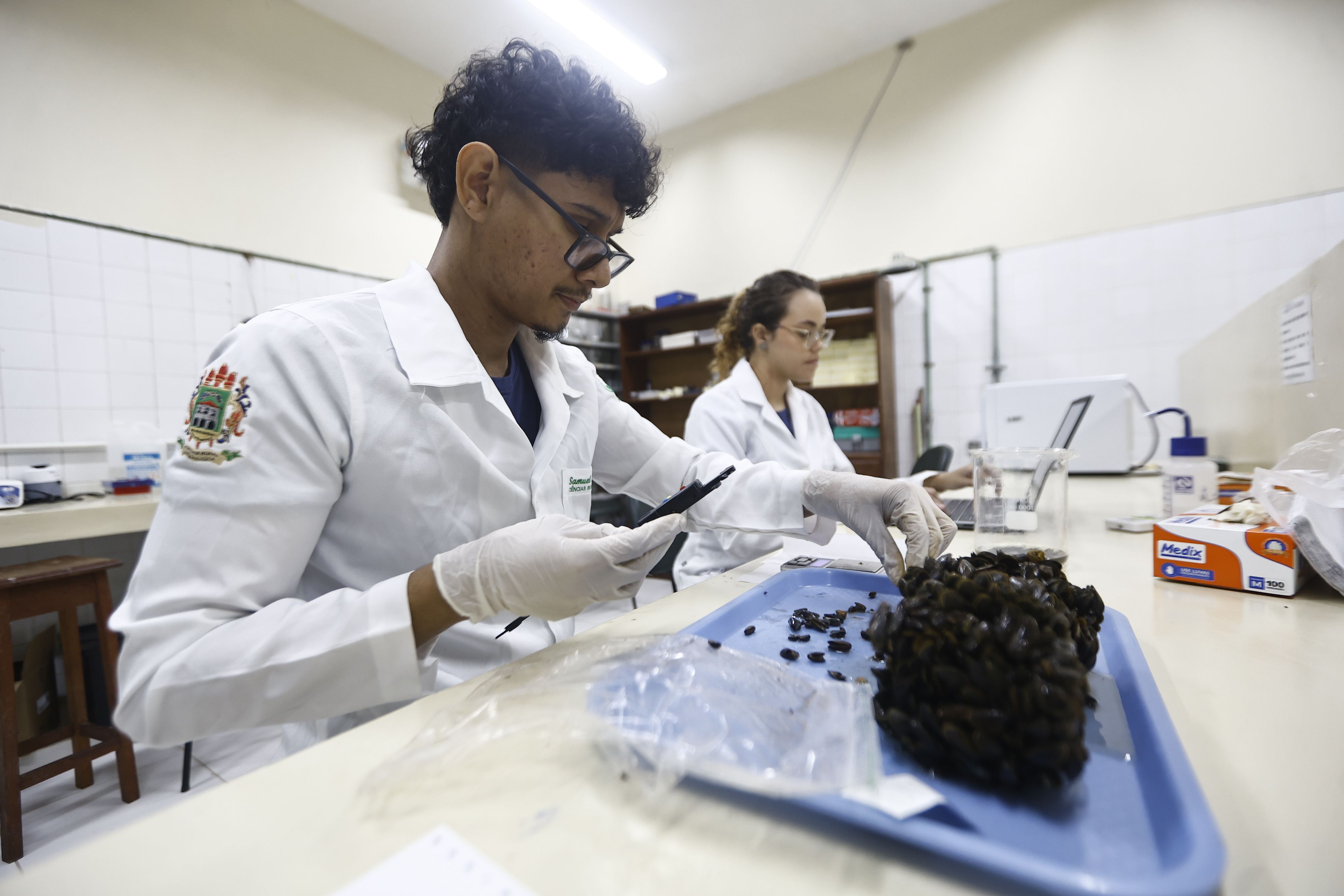
This is the case with the golden mussel. The mollusk was first detected in the Amazon in 2023, in Marabá, Pará. The initial study by Rafael Chagas and his team showed the presence of 88 individuals per square meter. In a second collection, in 2024, 12,000 individuals per square meter were identified, and its presence was observed in all municipalities bathed by the Tocantins River, having already reached municipalities on Marajó Island.
"Now, we are going to carry out a new sampling to check if there is settlement of larvae or large individuals in various points from Belém to Mosqueiro Island. Because if there is a presence of larvae, but the individuals do not develop, the dynamics of the Pará River itself are preventing colonization. But it is something that we are still going to test," indicates Chagas.
IMPACTS
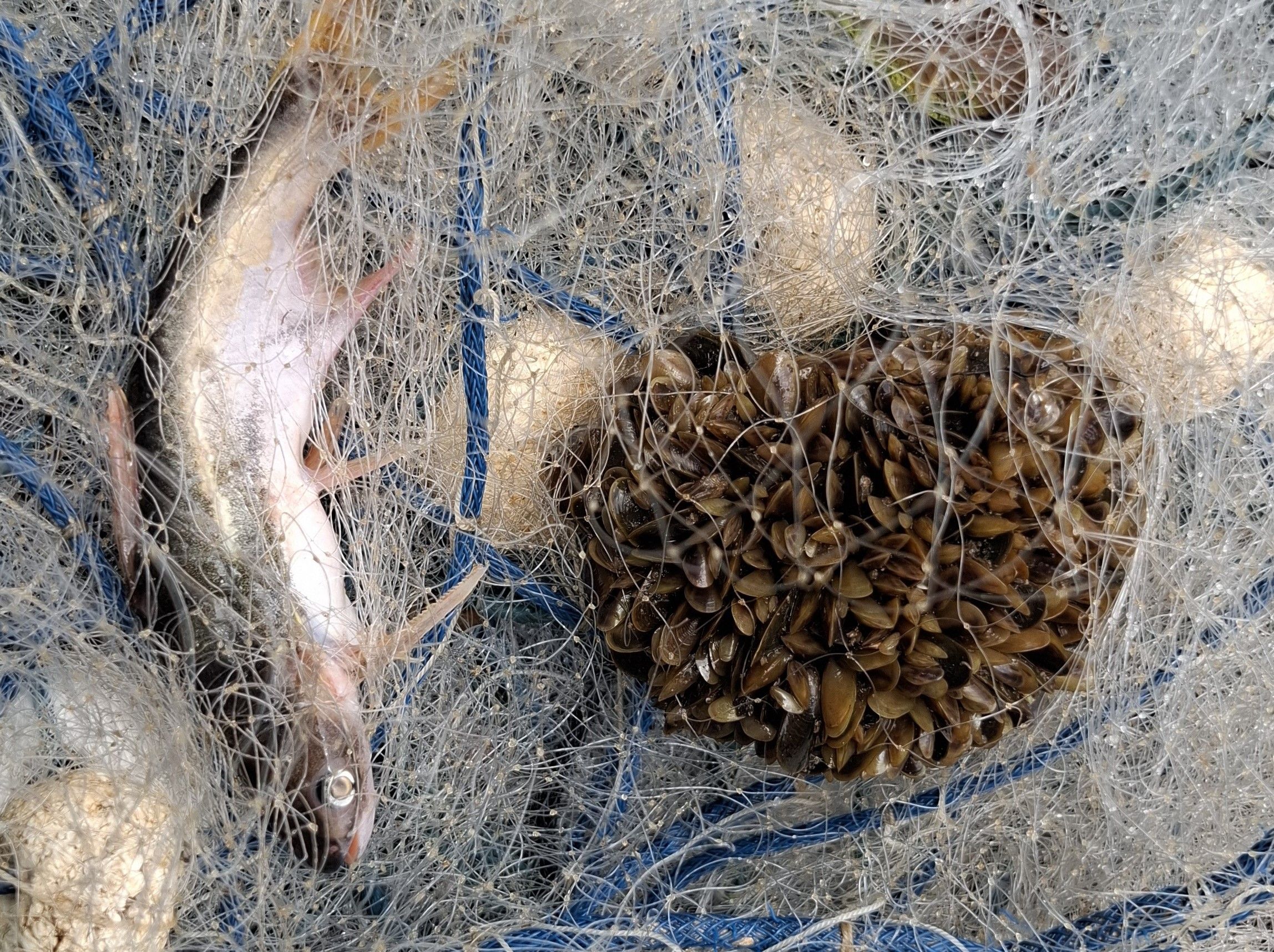
According to the researcher, the golden mussel has already caused impacts in the researched regions. “We are hearing reports mainly from those who work with fish farming. We have received photographs showing that the netting, especially in the net cages, becomes infested with mussels. This means that periodic management needs to be carried out more often, which means a greater expenditure of time and resources. There are also already records in fishing: fishermen cast their nets, which come back covered in mussels, and therefore they cannot fish. These are already economic losses,” reports Chagas.
According to the fisheries engineer, the impact on fish farming is immediate, due to the accelerated colonization. “In fishing, it may take a little longer, because this species can alter the entire dynamics of the water, all the microscopic fauna of the water and, consequently, in a chain reaction, it will end up affecting other organisms, especially fish, which have this economic importance for the region,” he emphasizes.

HEALTH RISK
In addition, the mollusk is a health risk. “We receive reports that the population wants to eat the golden mussel because it resembles the species of mussel we have here in the region. But it is not recommended to eat this invasive species. It has several pathogens, several toxins, and can also accumulate metals. There is also a second concern: we have already discovered that the Piau fish can consume this mollusk. So, this concentration of metals passes to the fish and, consequently, the population will also be affected,” warns Chagas. And there is also the invasion and contamination of water reservoirs, as it has been happening in the riverside communities of Abaetetuba.
Alex Lacerda de Souza, superintendent of the Brazilian Institute of Environment and Renewable Natural Resources (Ibama) in Pará, recalls that invasive species are the biggest cause of extinction of native species not only in Brazil, but throughout the world. “These are species that will compete for food, prey on native species, may bring some kind of disease, adapt better to that environment momentarily, and have no predators. This can cause the extinction of some species,” warns the biologist.
Other invaders are a concern
In addition to the golden mussel, there are other invasive species in the Amazon that are causing concern. One example is the Malaysian prawn, which has reduced the population of the regional shrimp. “The Malaysian prawn grows quite large, reaching thirty centimeters. So, it ends up feeding on the native shrimp or even competing for food and space. What has been happening is that fishermen throw the matapi [traditional artisanal trap of the Amazon region] and, when they removes it, only the invader comes and not the native one. And the invader ends up being commercialized,” highlights Chagas.
The researcher also cites the invasive species African snail, a known vector of parasites that cause diseases in humans, and the tilapia fish, which has great commercial importance in other regions of the country, but is considered invasive because it reproduces easily, is very resistant, and competes with native fish.
Regarding flora, biologist Lana Magalhães cites acacias, leucaenas, mango trees, and jackfruit trees as some invasive species. “There is a bill to eradicate leucaena from Brazil. It is very present in urban afforestation. Mango trees are present in many environments in the Amazon, due to their food supply, as is the jackfruit tree, which causes problems in the region,” says the researcher.
Jackfruit tree promotes chemical warfare
Lana Magalhães' studies focused on plant species in the Sumaúma State Park, in Manaus. According to the research, twelve invasive species were found, in addition to several other exotic species. One of them was the jackfruit tree, investigated more specifically by the biologist.
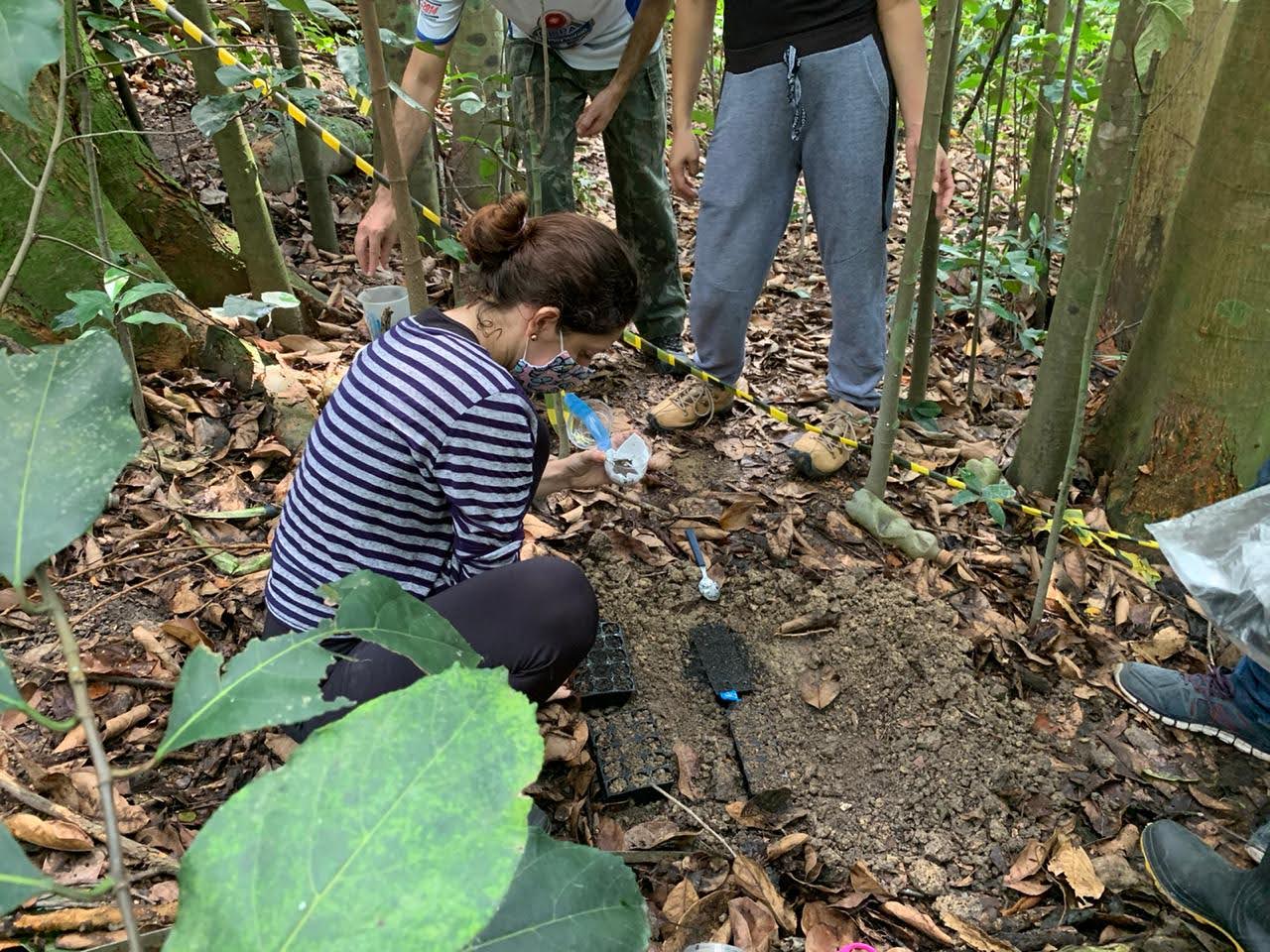
“The success of the jackfruit tree is partly due to its reproductive capacity: each reproductive cycle generates more than one hundred fruits, and each fruit contains more than one hundred seeds. Furthermore, it tolerates environments with different characteristics. And our study also identified that it has the ability to release chemical substances that inhibit competing species from establishing themselves around it. It's a chemical competition. We conducted experiments and were able to demonstrate that, under the jackfruit tree, there was a reduction in the germination or initial development of native species,” she explains.
Lana Magalhães emphasizes the importance of environmental education to contain the advance of invasive species. “We visited backyards in the Tupé Sustainable Development Reserve and realized that residents were unaware of the prohibition of invasive exotic species in conservation units. The objective of these areas is precisely the conservation of native biodiversity,” highlights the biologist.
Actions seek to curb threats
Given the threat posed by invasive species, what can be done? According to Alex Souza, from Ibama in Pará, the focus has been on raising public awareness. “Last year, we coordinated the first seminar in Pará on the golden mussel, in Igarapé-Miri. Our main struggle is to prevent the golden mussel from spreading to other basins beyond the Tocantins. We are experiencing a very rapid expansion of this species, but the trend is for this population to stabilize. Eliminating this animal itself is very difficult, so we seek to raise awareness among communities so that they can control it in their own areas,” says the biologist.
Rafael Chagas reinforces the impossibility of suppressing the species and the importance of education. The research he is involved in has a subproject called "Roundtable Discussion: The role of the community in combating the golden mussel". “Unfortunately, the golden mussel is here, we have to get used to it. So, we go to the communities and talk about methods to reduce its quantity in the environment. We went to a community and saw that it was full of mussels under the pier, and the residents didn't even know. So, they organized a cleanup effort, which will need to be done periodically. We also talked to fishermen to have their boats inspected to see if there is encrustation of the mollusk,” says the fisheries engineer.
In the same area of environmental education, Lana Magalhães has already carried out a project with her students from the state public school system in Manaus. “I worked with them on their knowledge of biological invasions, and most didn't know what an invasive species was. This project showed that we need to improve knowledge about this in basic education, especially in our region, where we have this great biodiversity. It is necessary to create policies to identify the pathways of introduction of exotic species, to understand them before they become a problem, and to carry out management actions. But it is also fundamental to educate society about the risks brought by exotic species and about the importance of valuing native species,” she says.
INSTITUTIONAL PARTNERSHIP
The production of Liberal Amazon is one of the initiatives of the Technical Cooperation Agreement between the Liberal Group and the Federal University of Pará. The articles involving research from UFPA are revised by professionals from the academy. The translation of the content is also provided by the agreement, through the research project ET-Multi: Translation Studies: multifaces and multisemiotics.


